Frontally
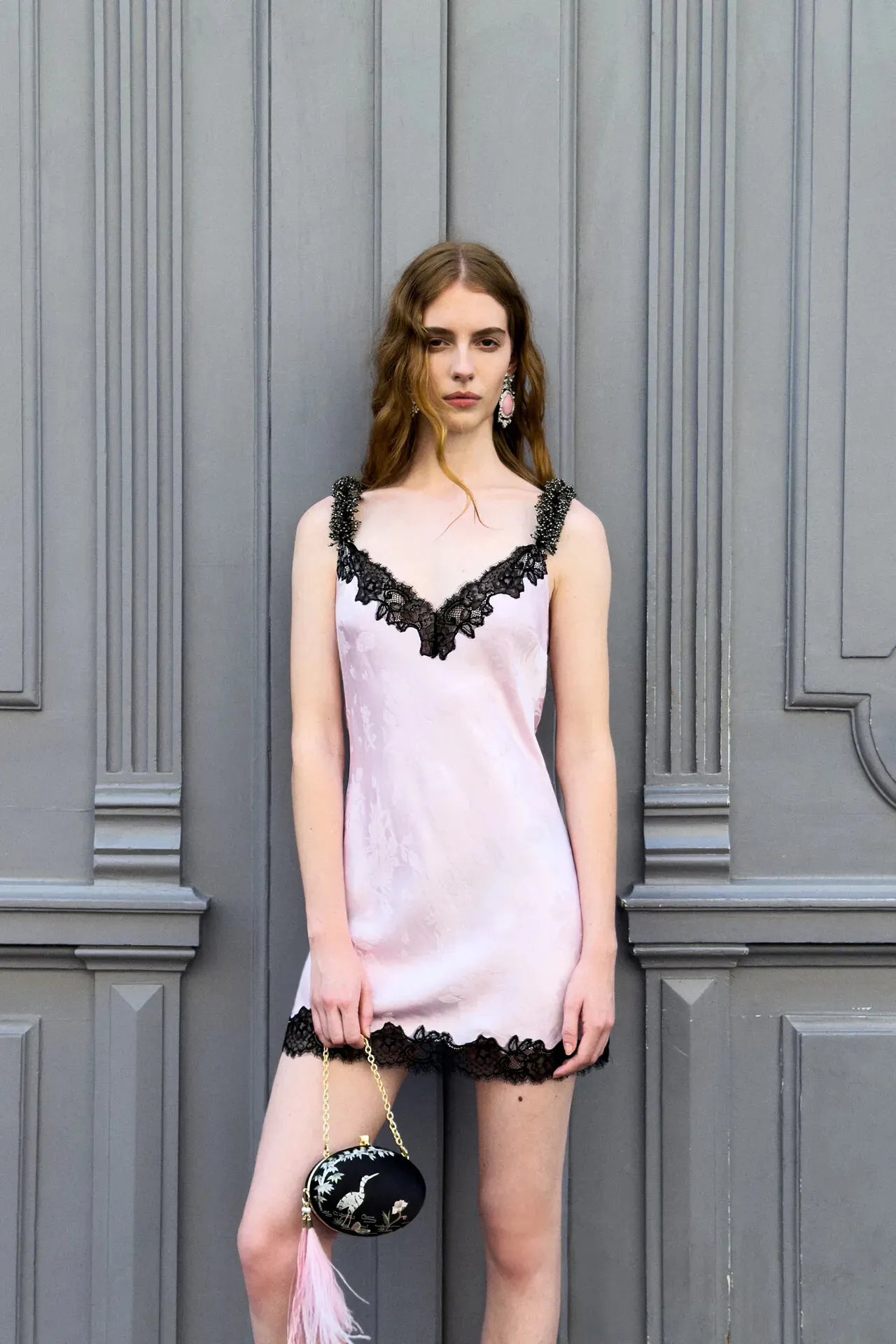
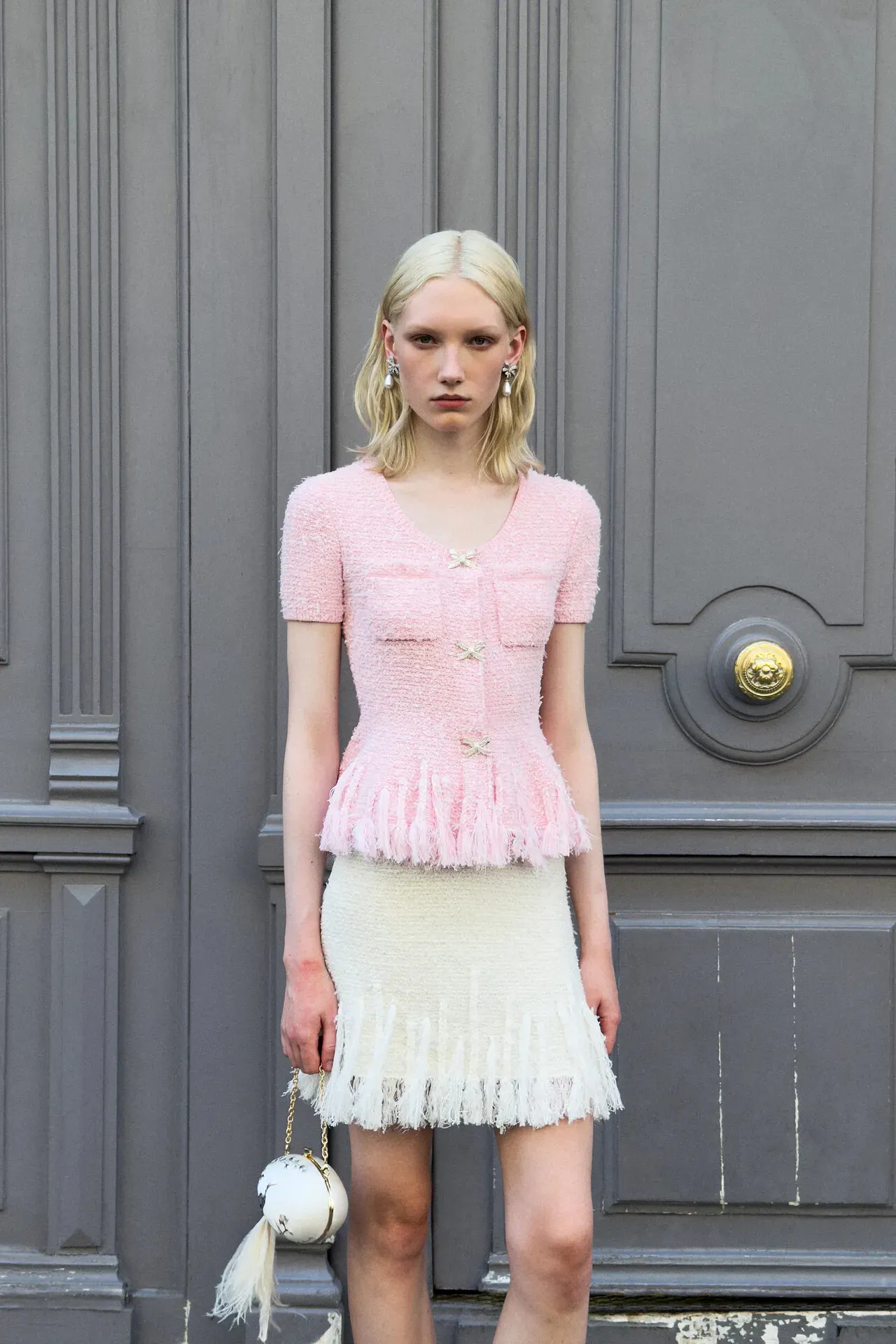
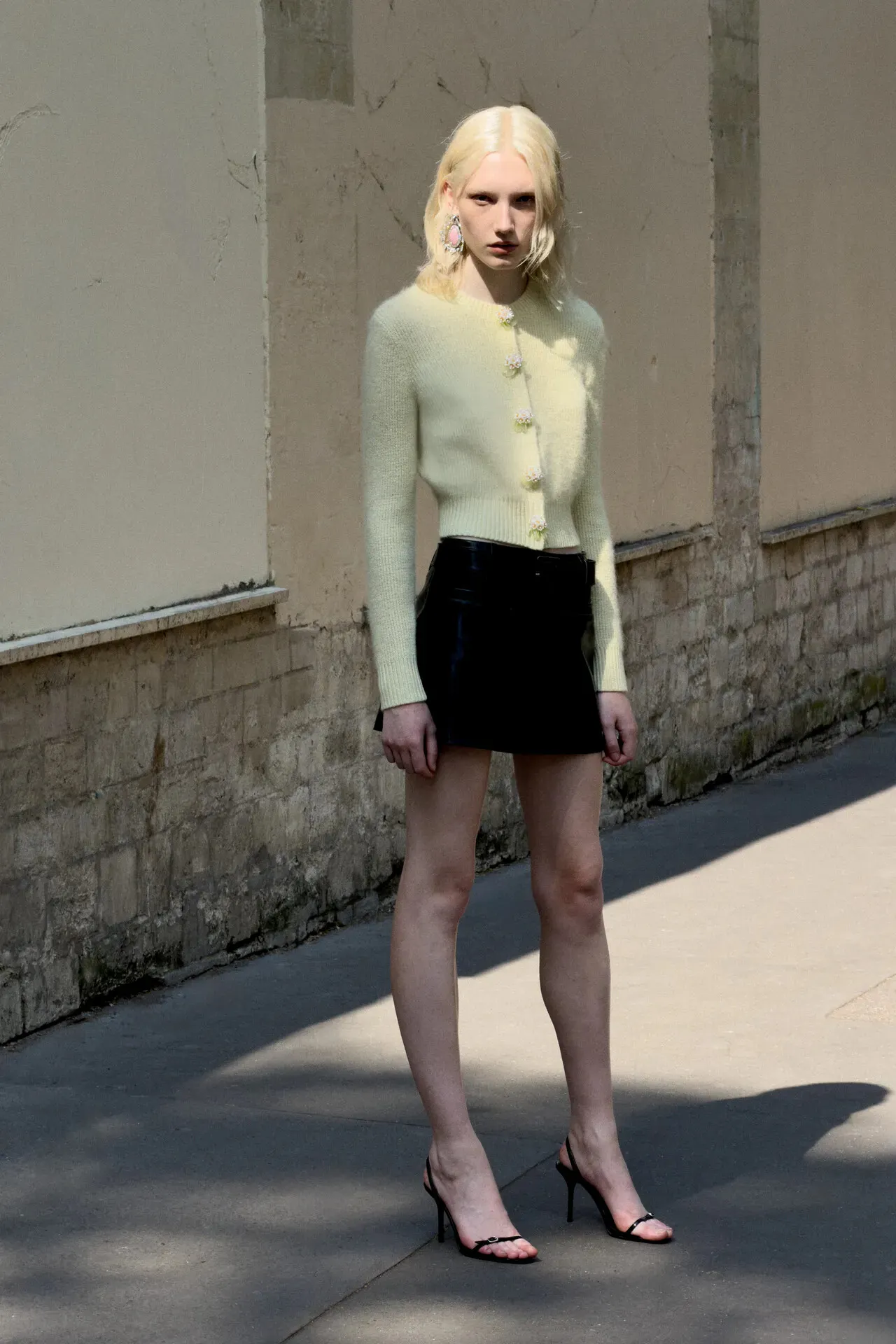
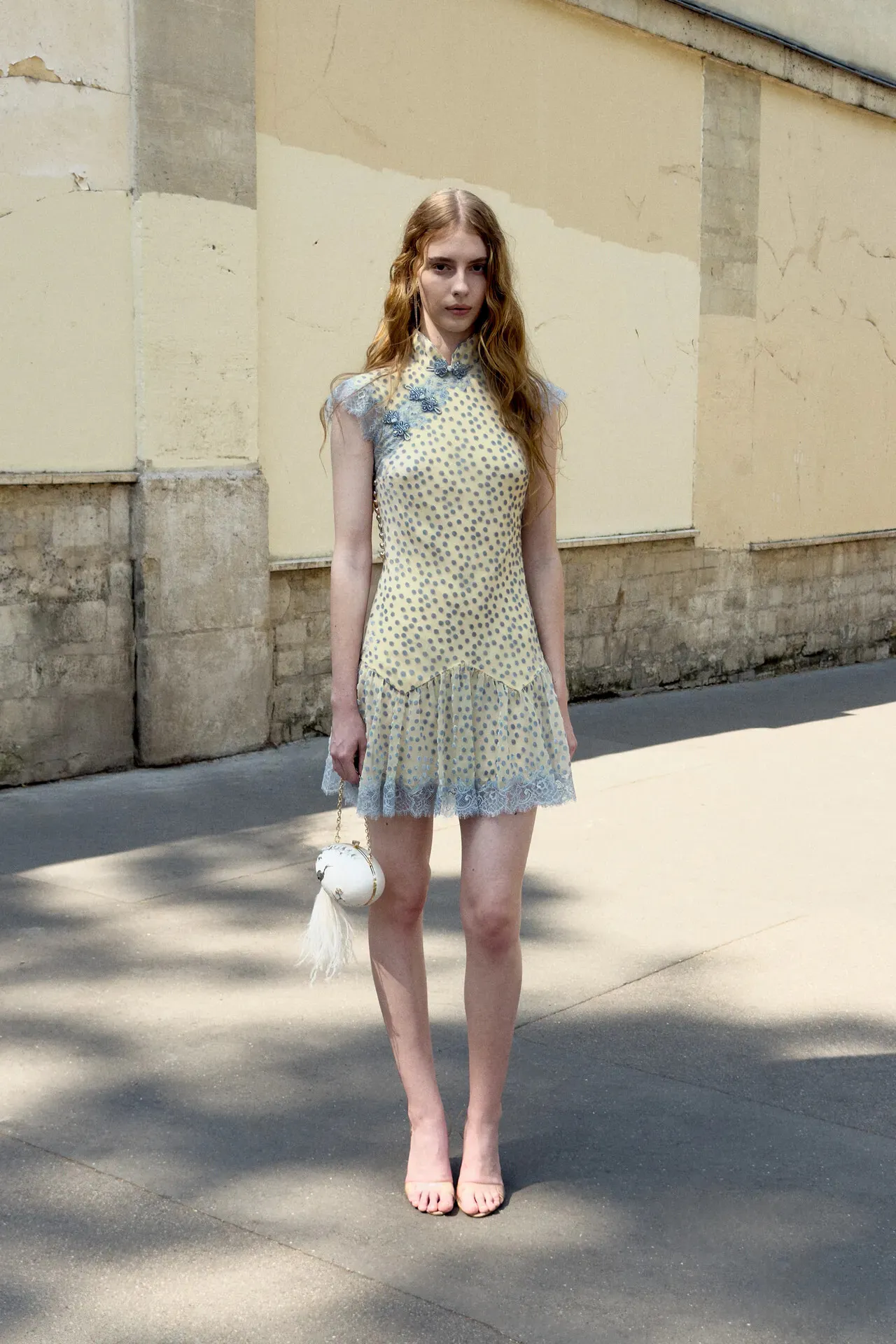
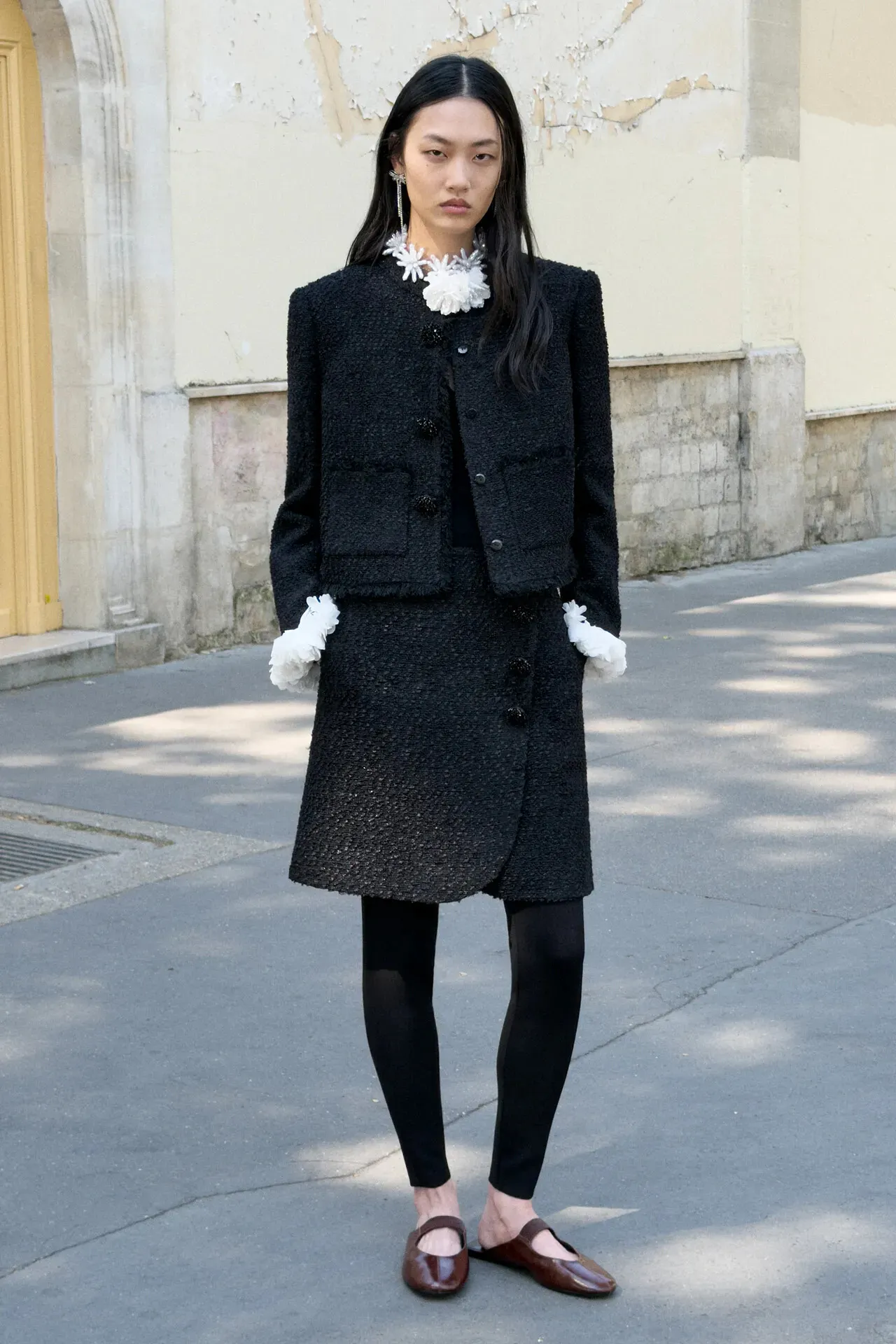
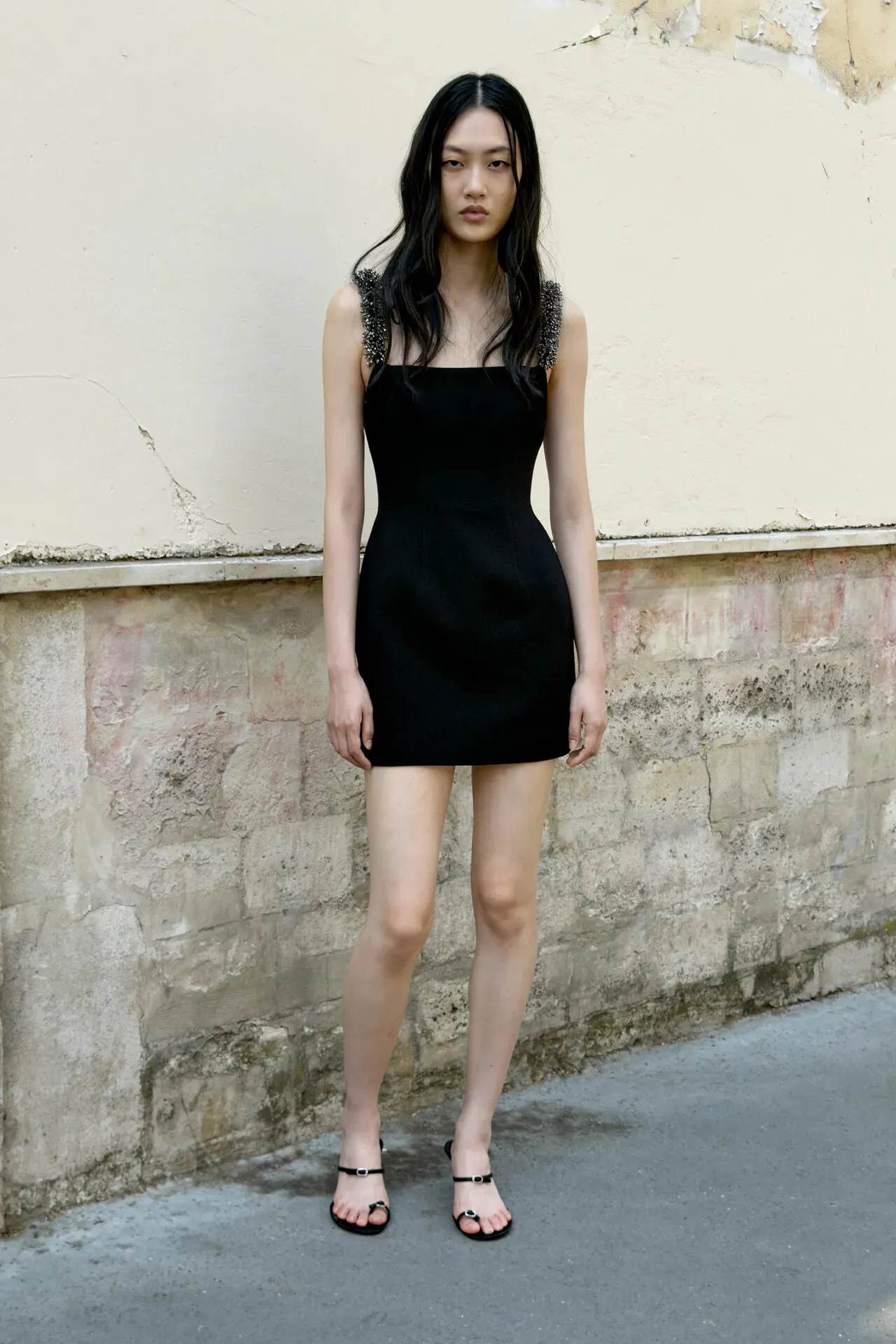
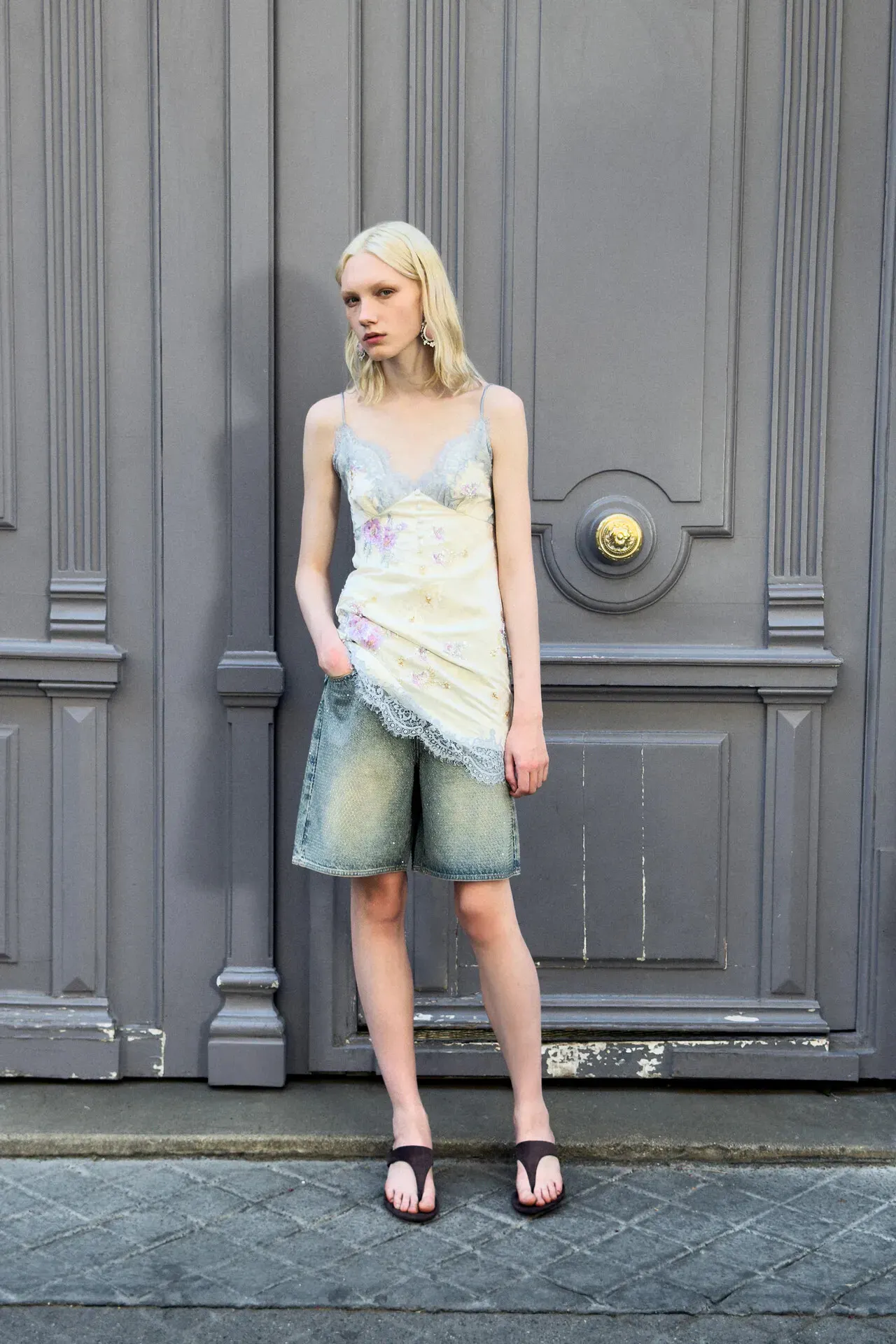
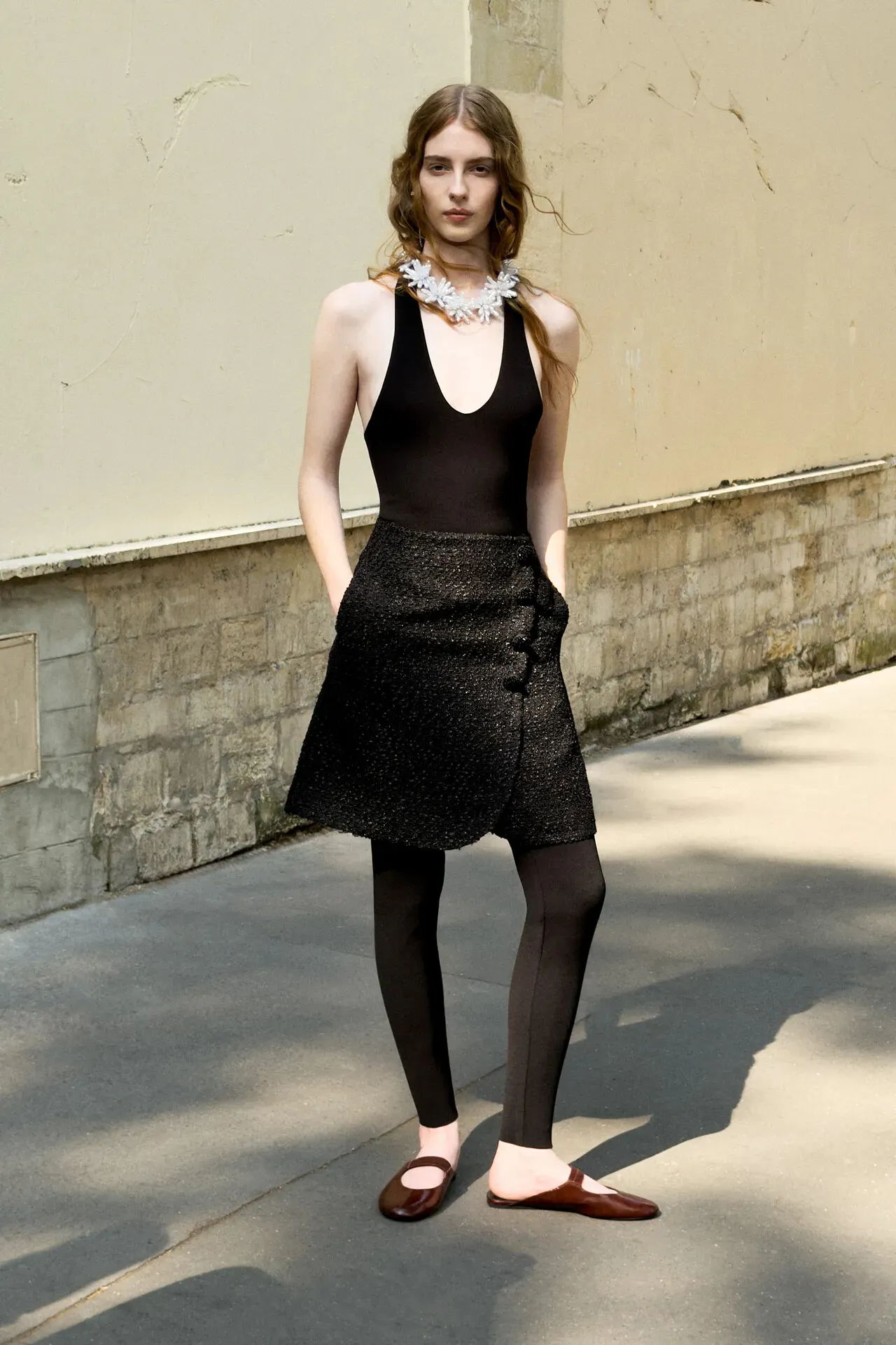
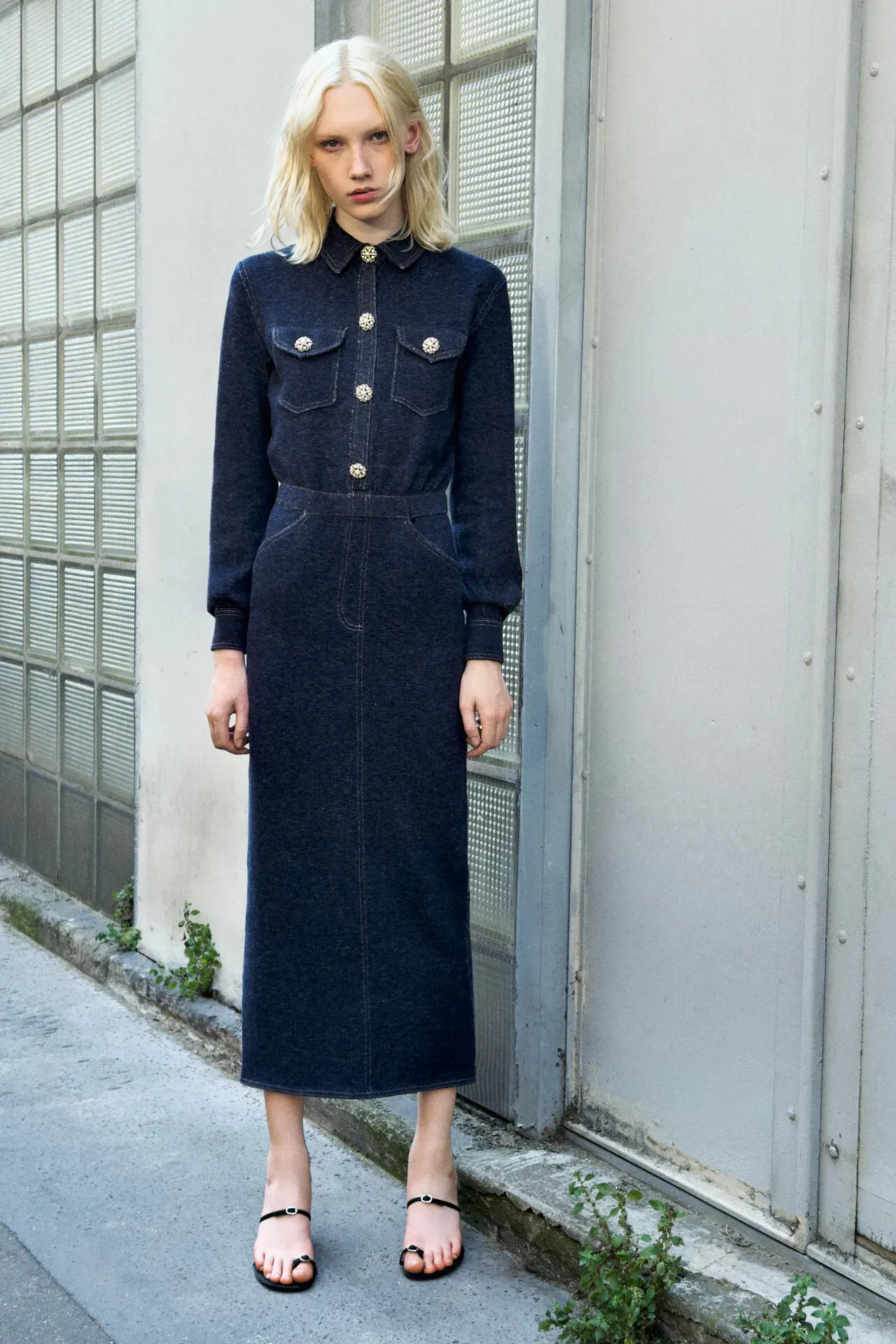
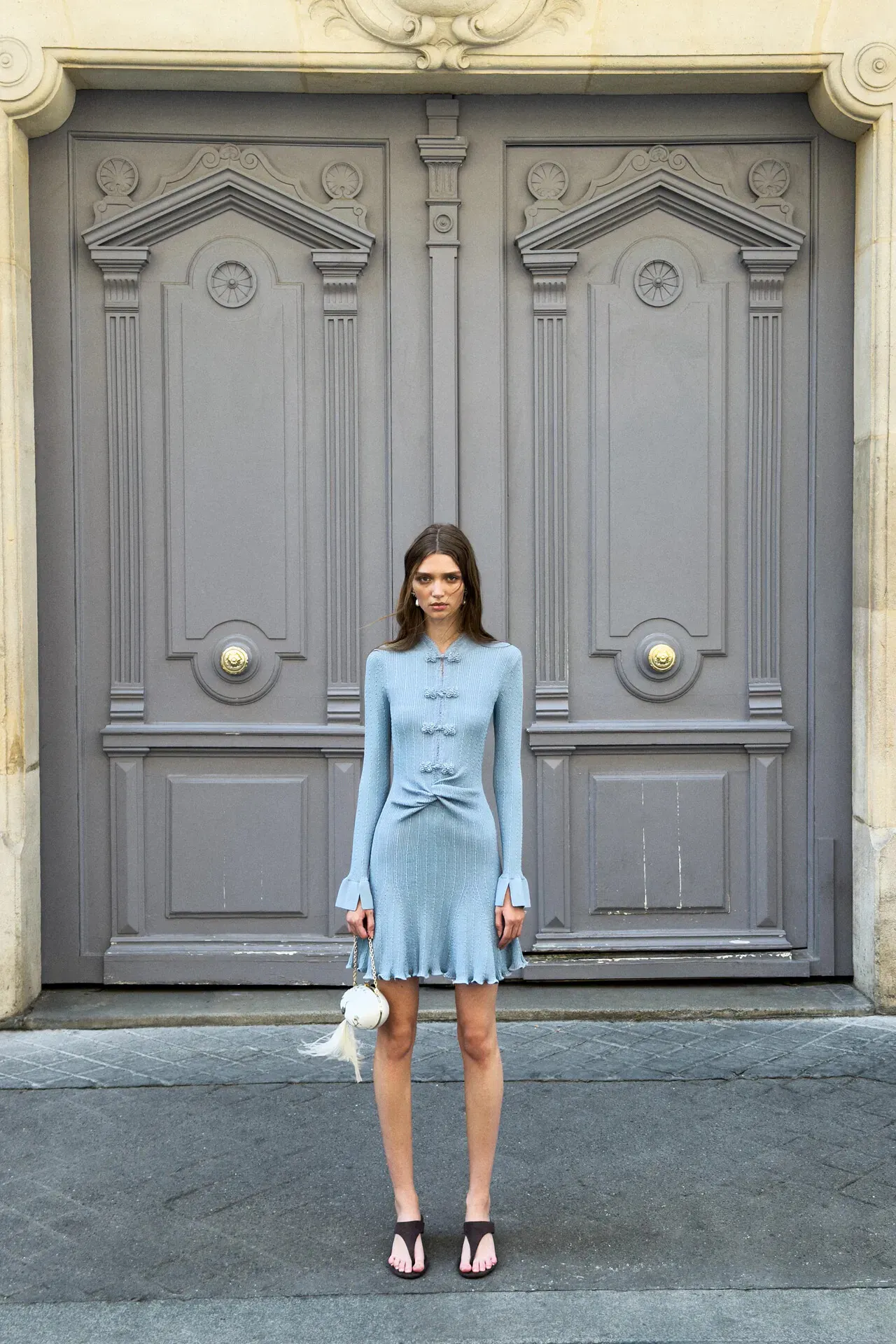
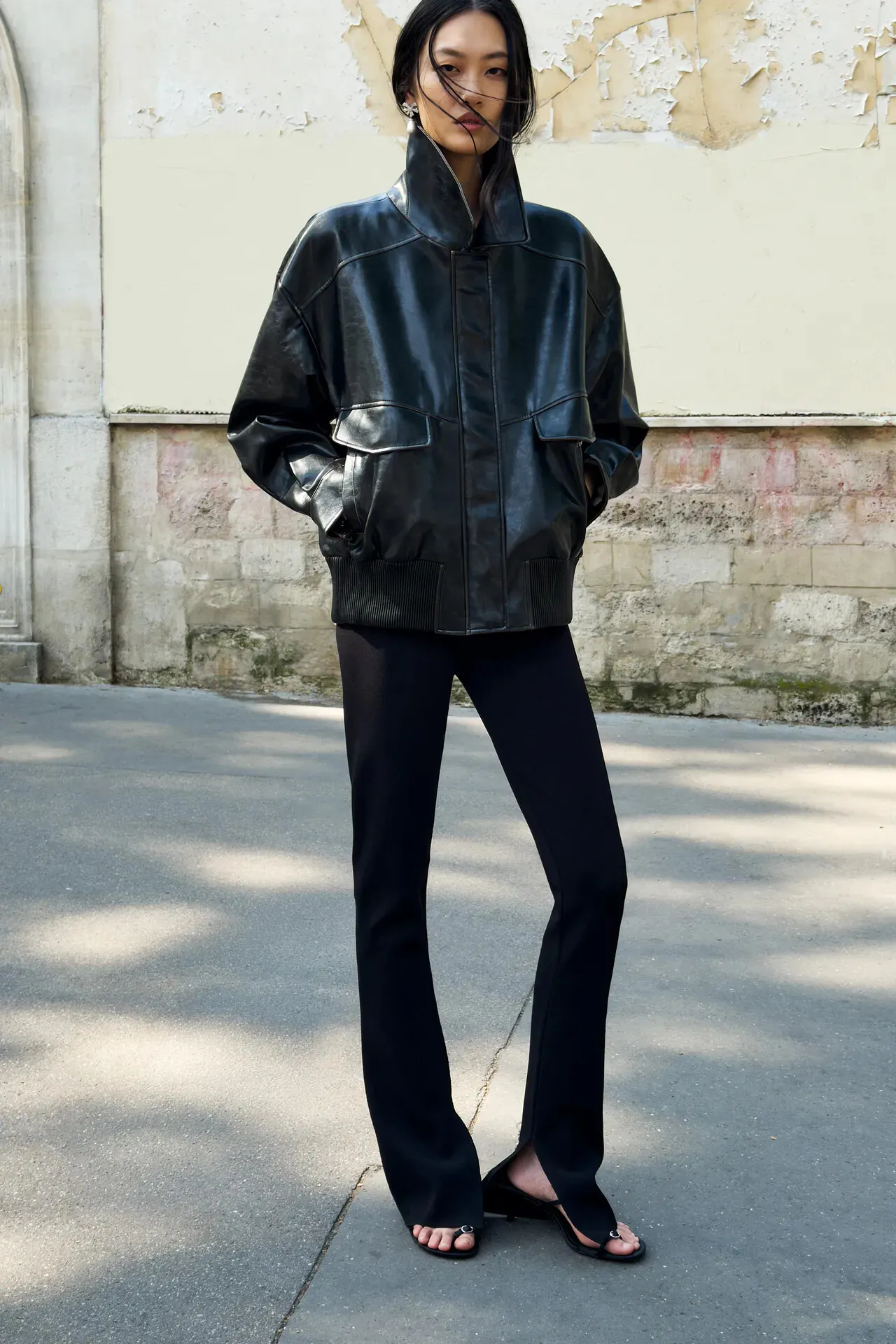
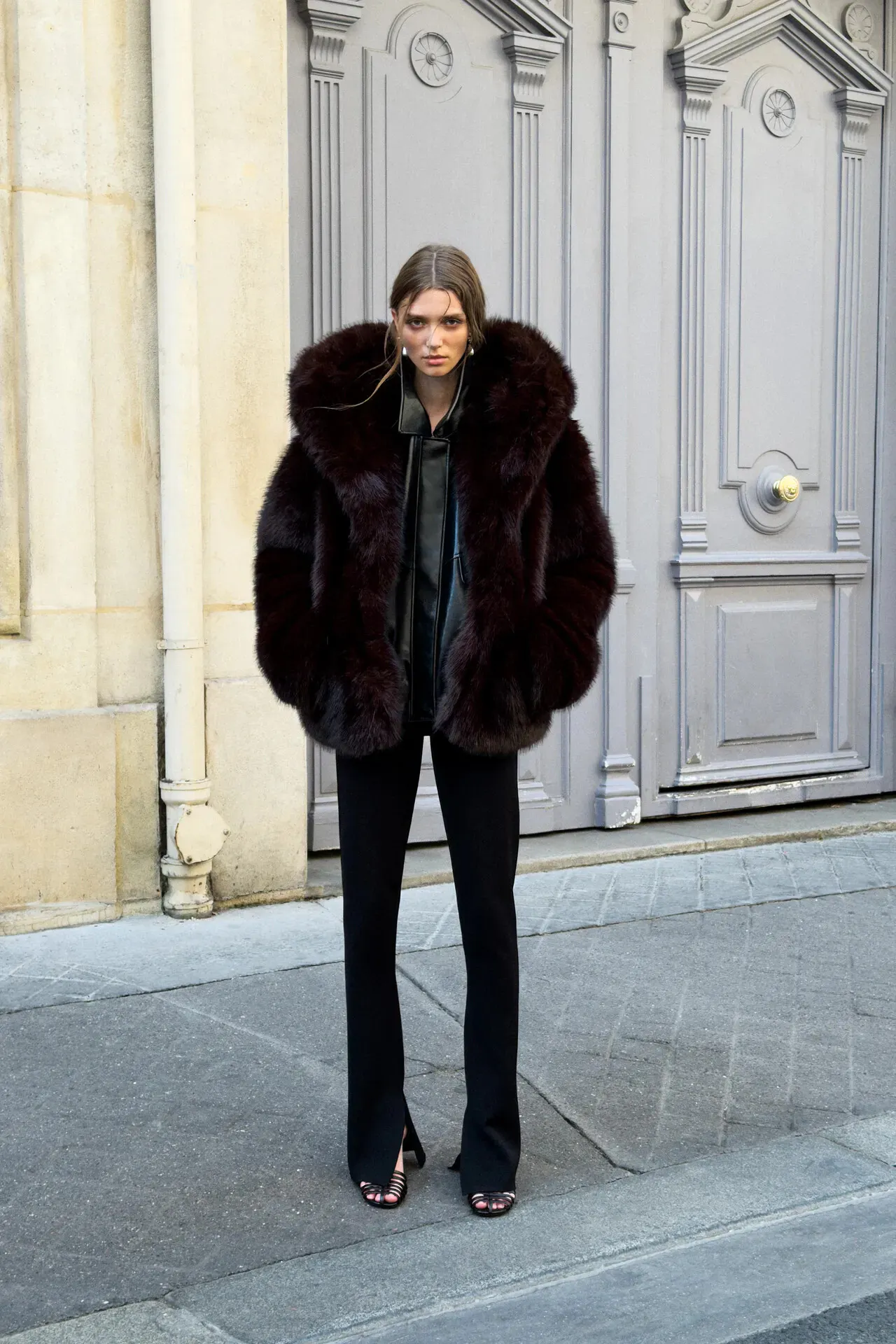
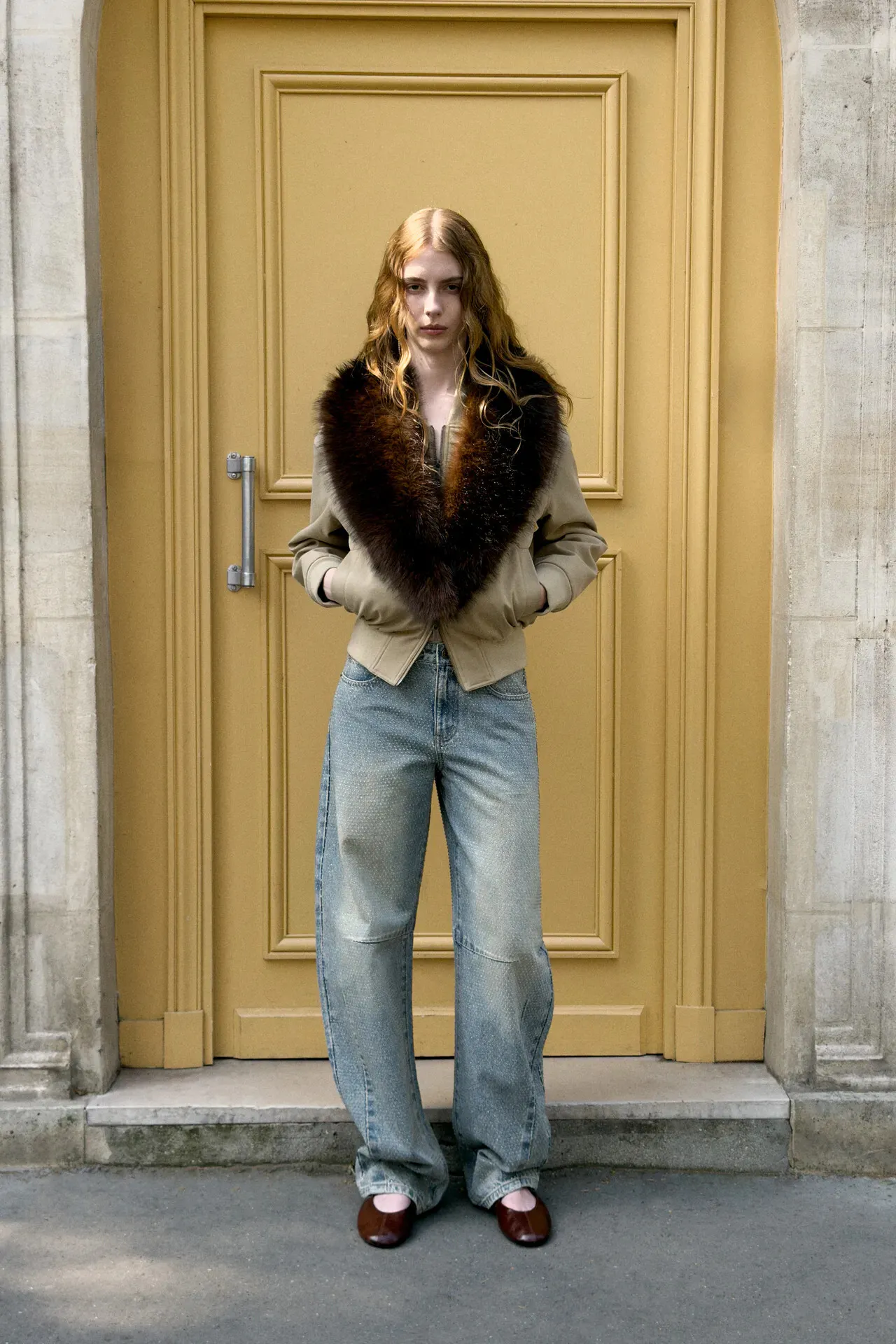
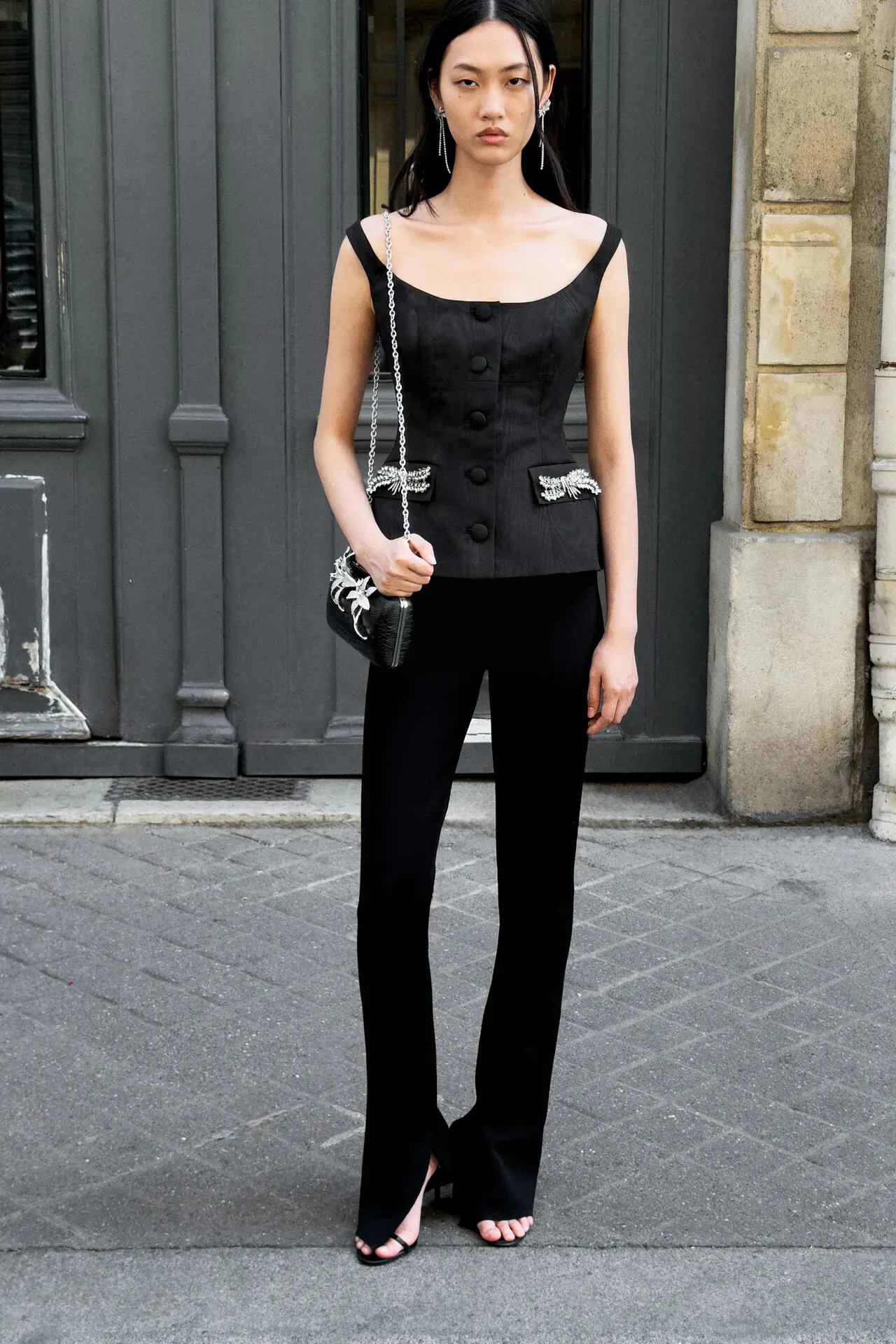
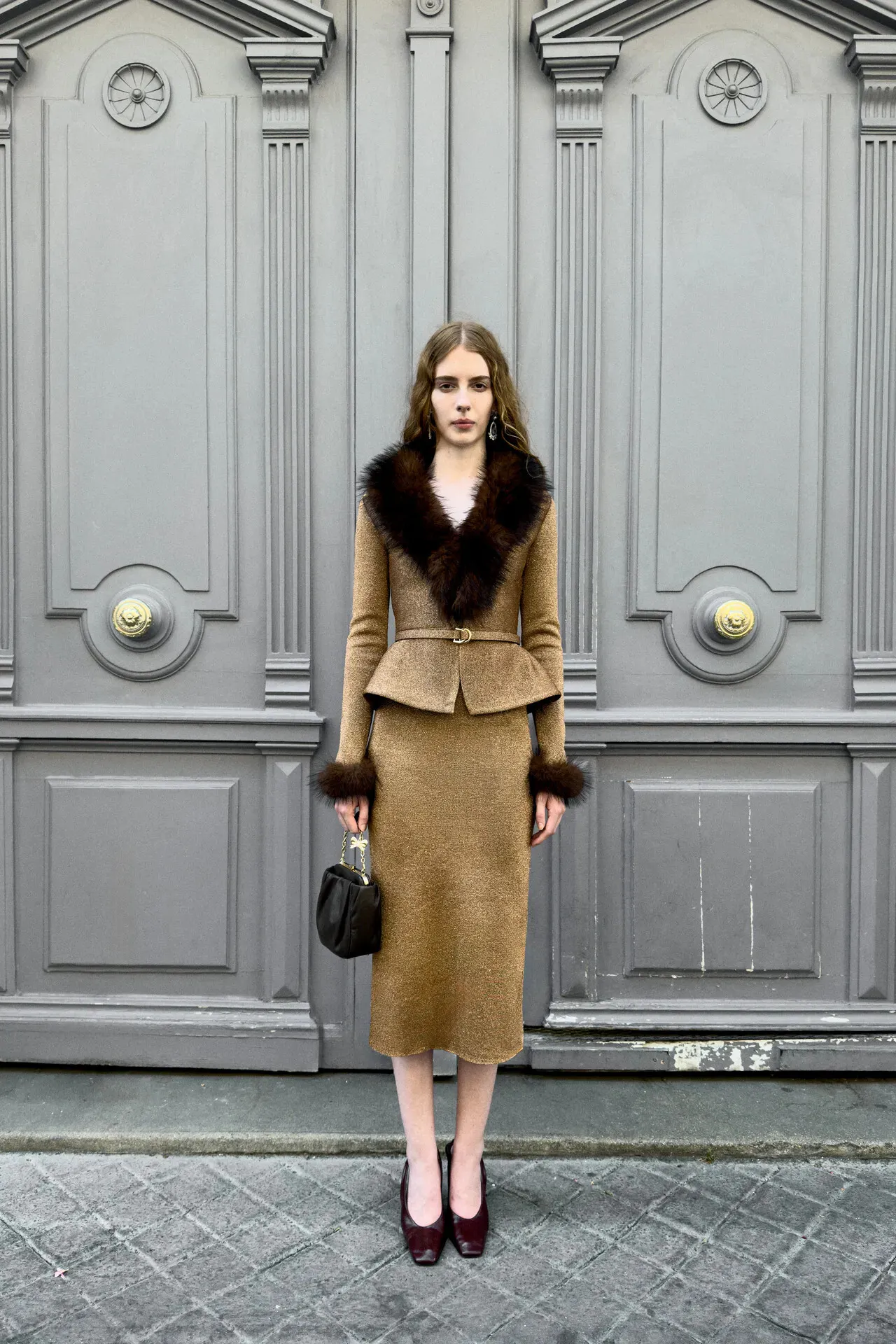
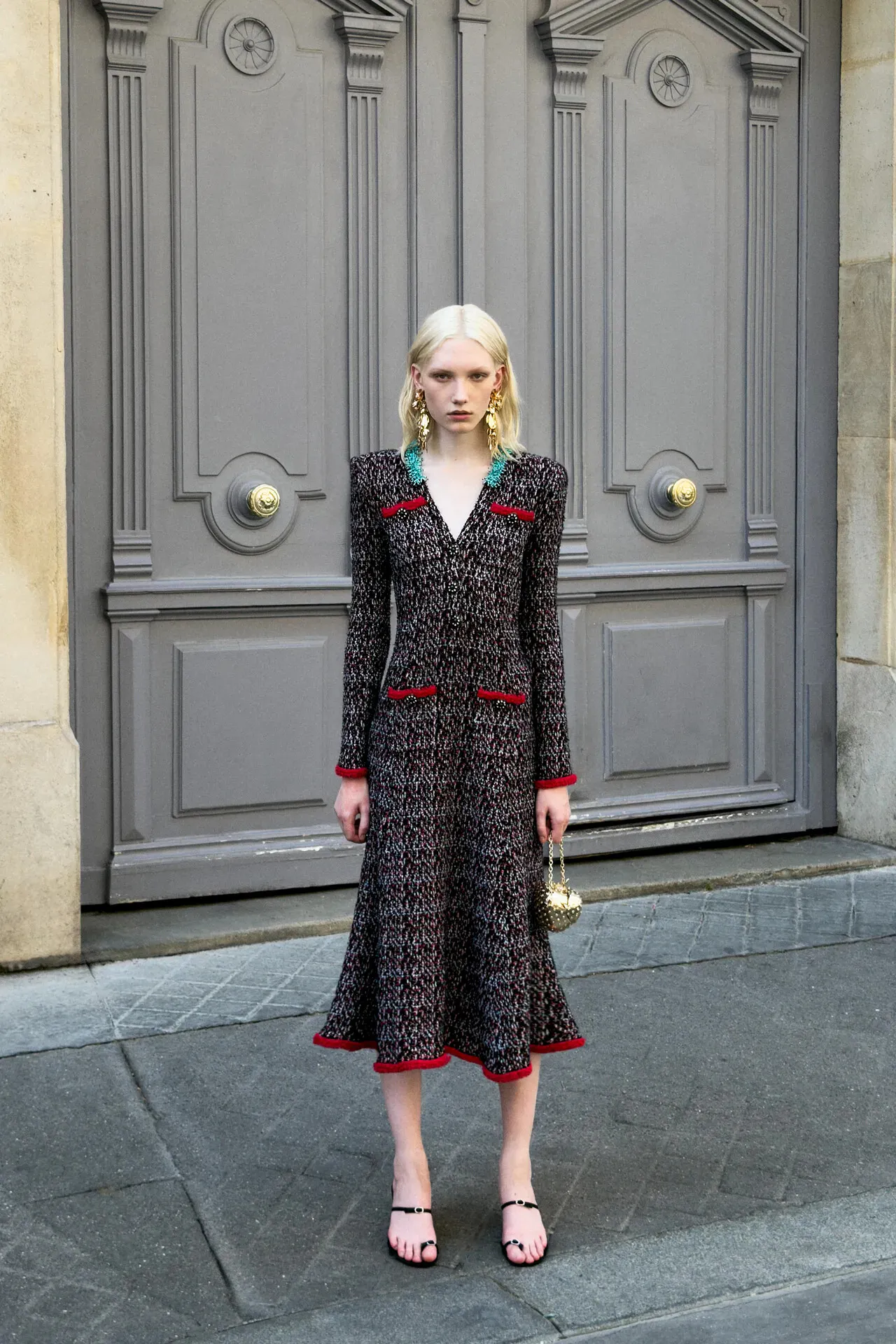
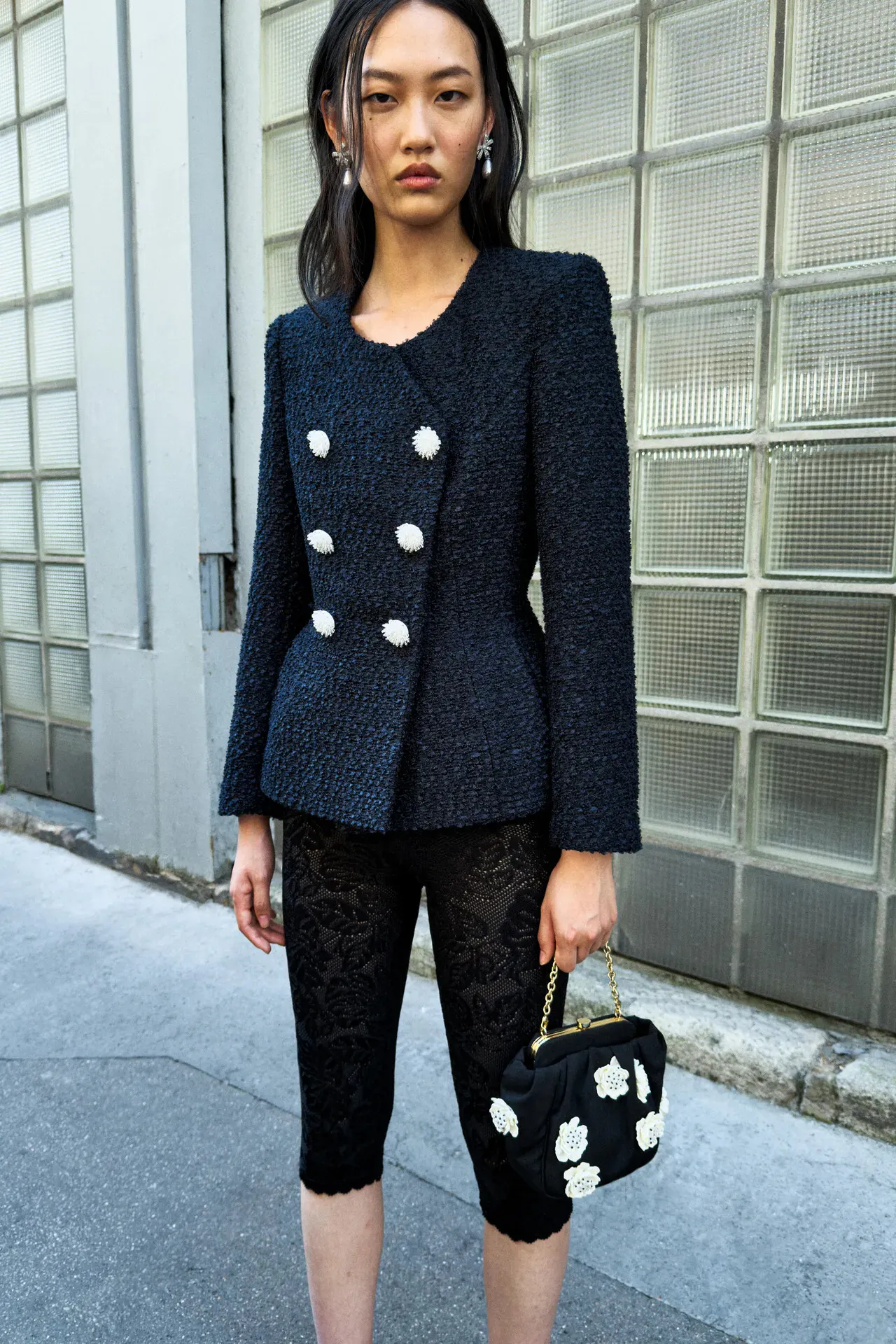
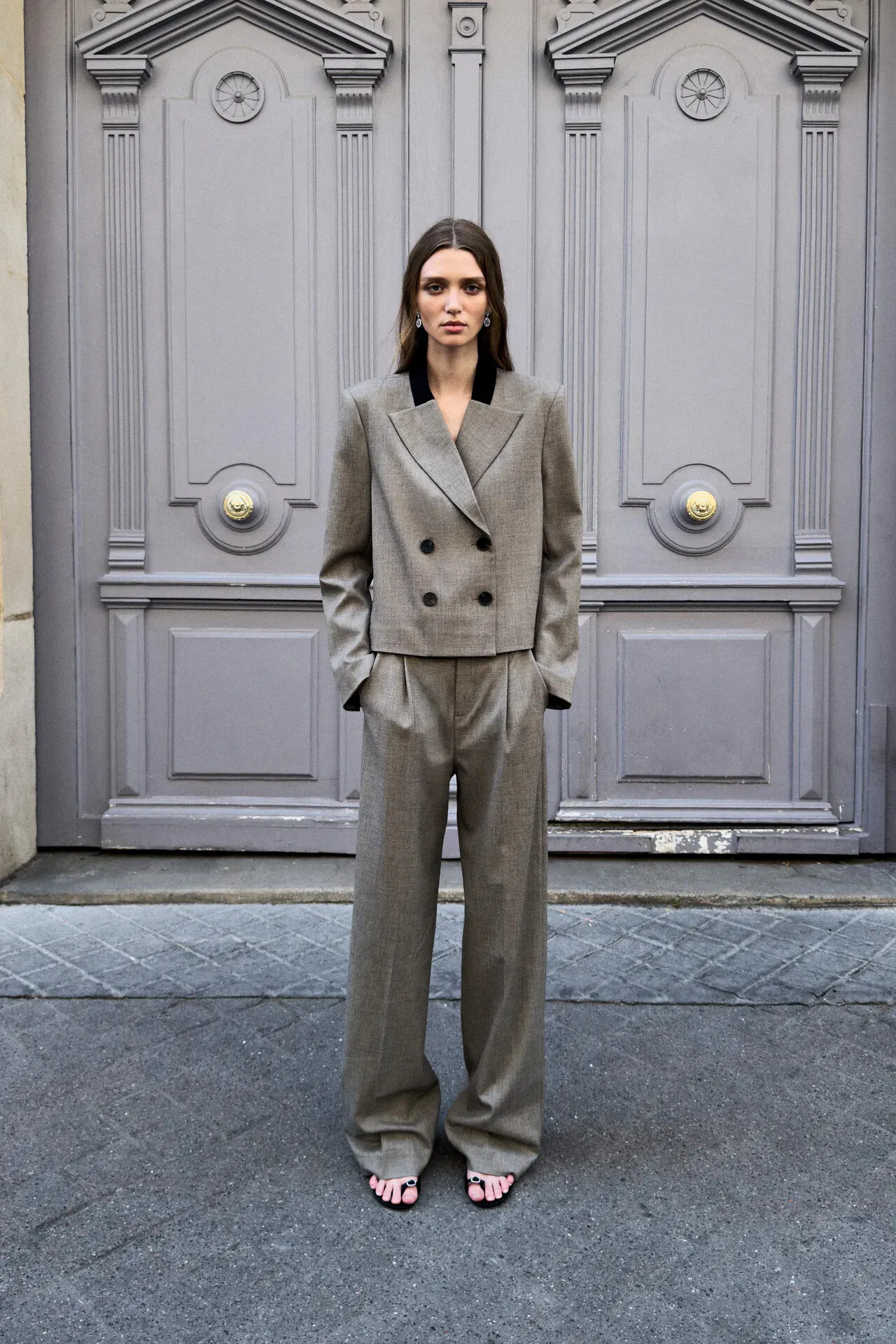
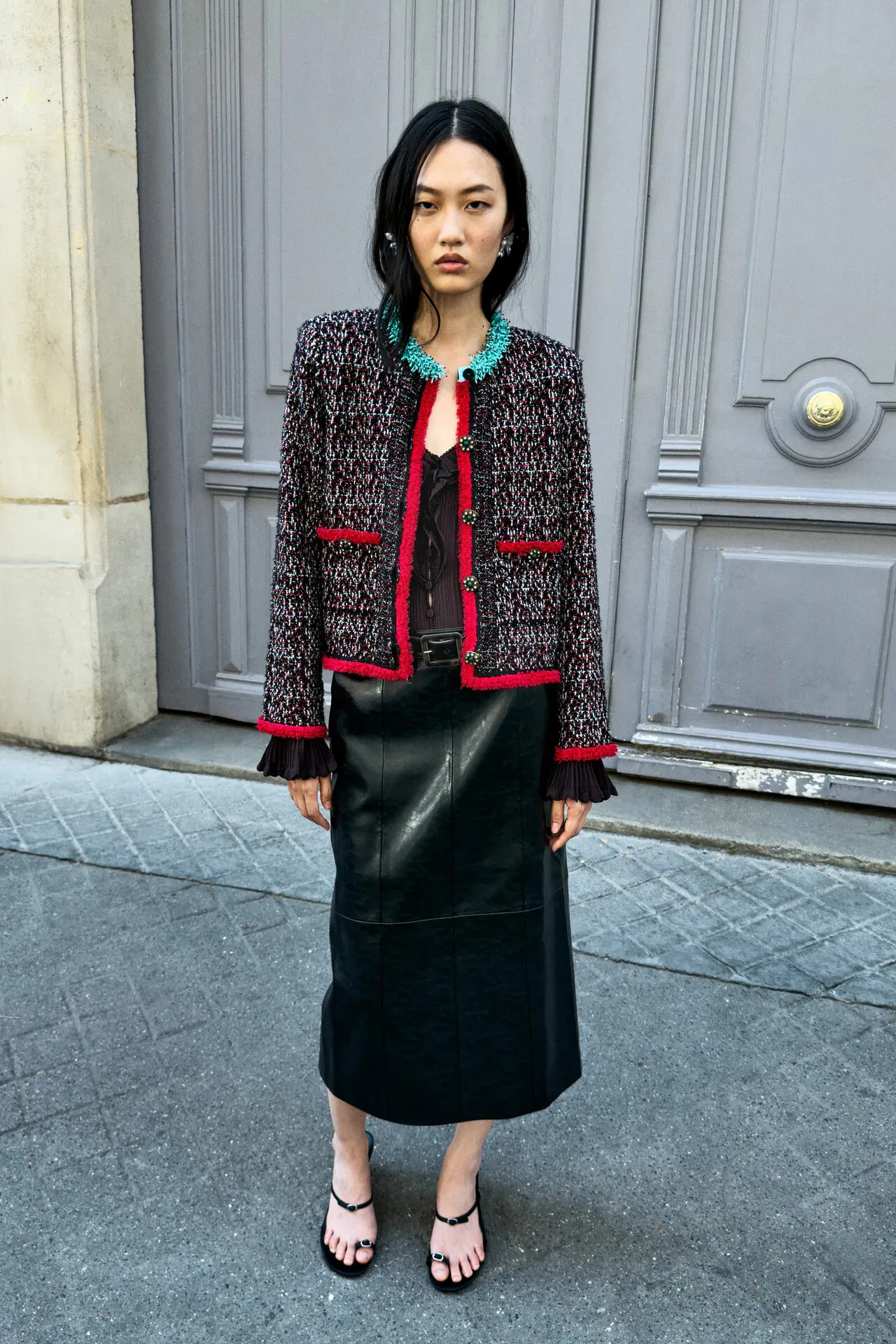
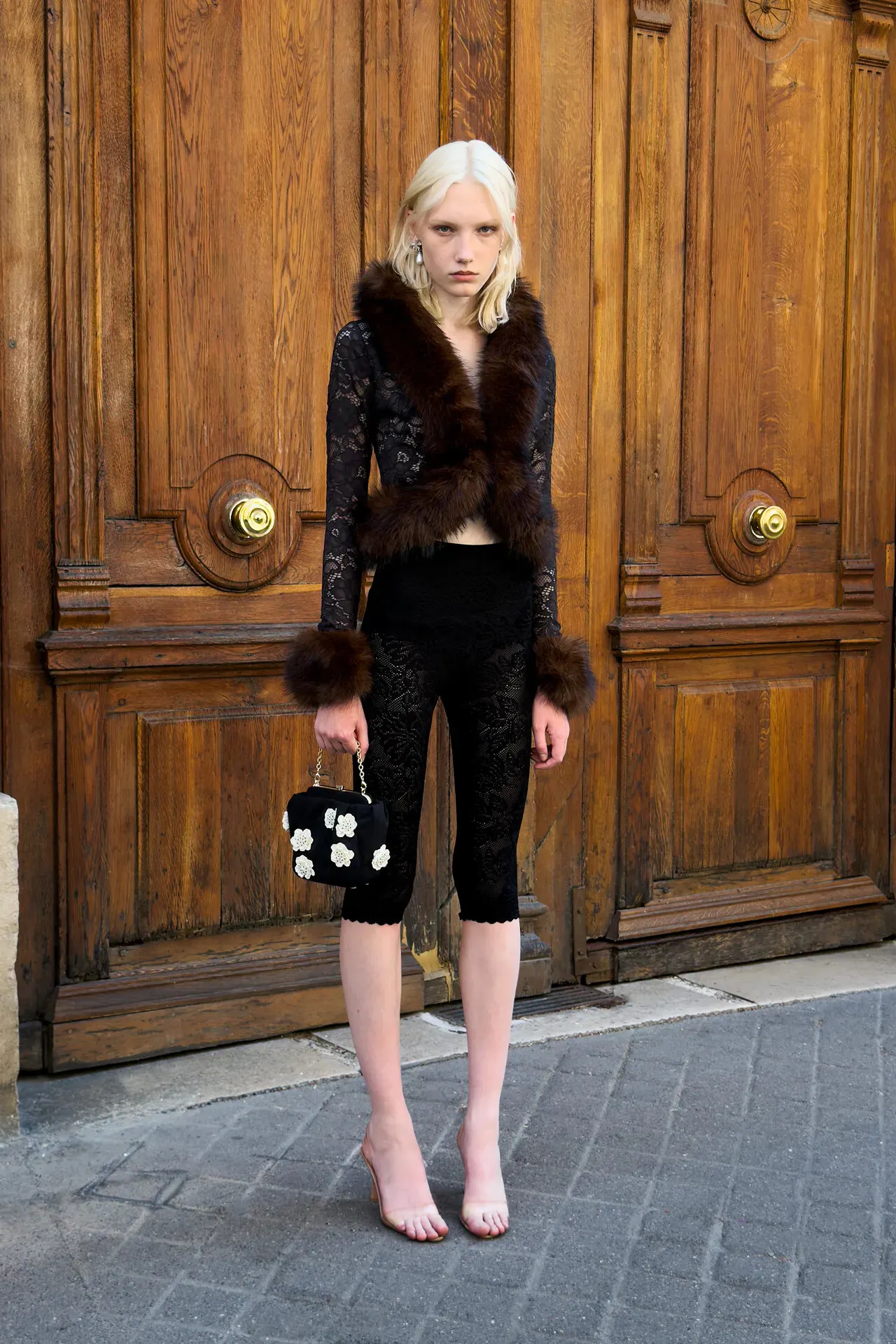
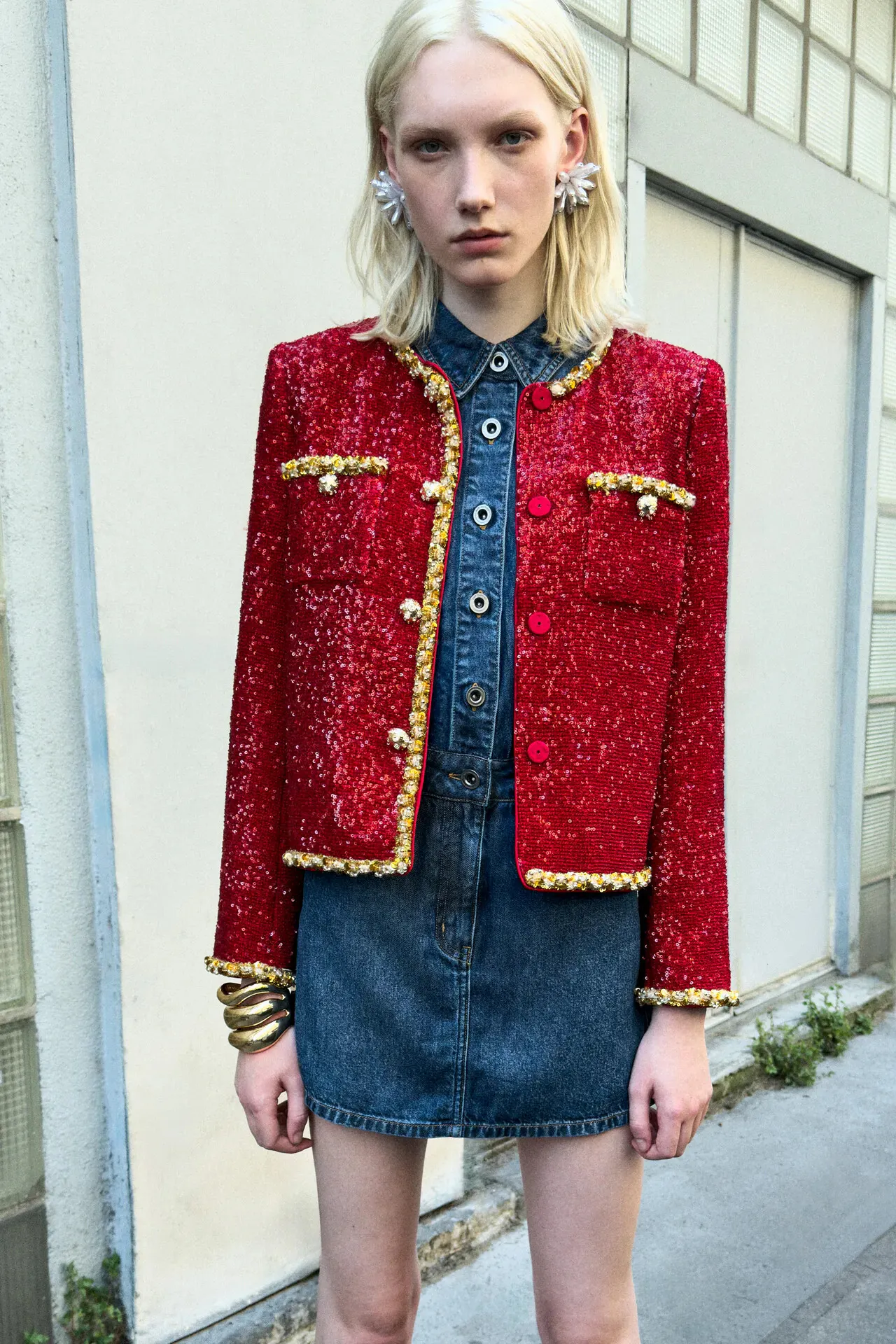
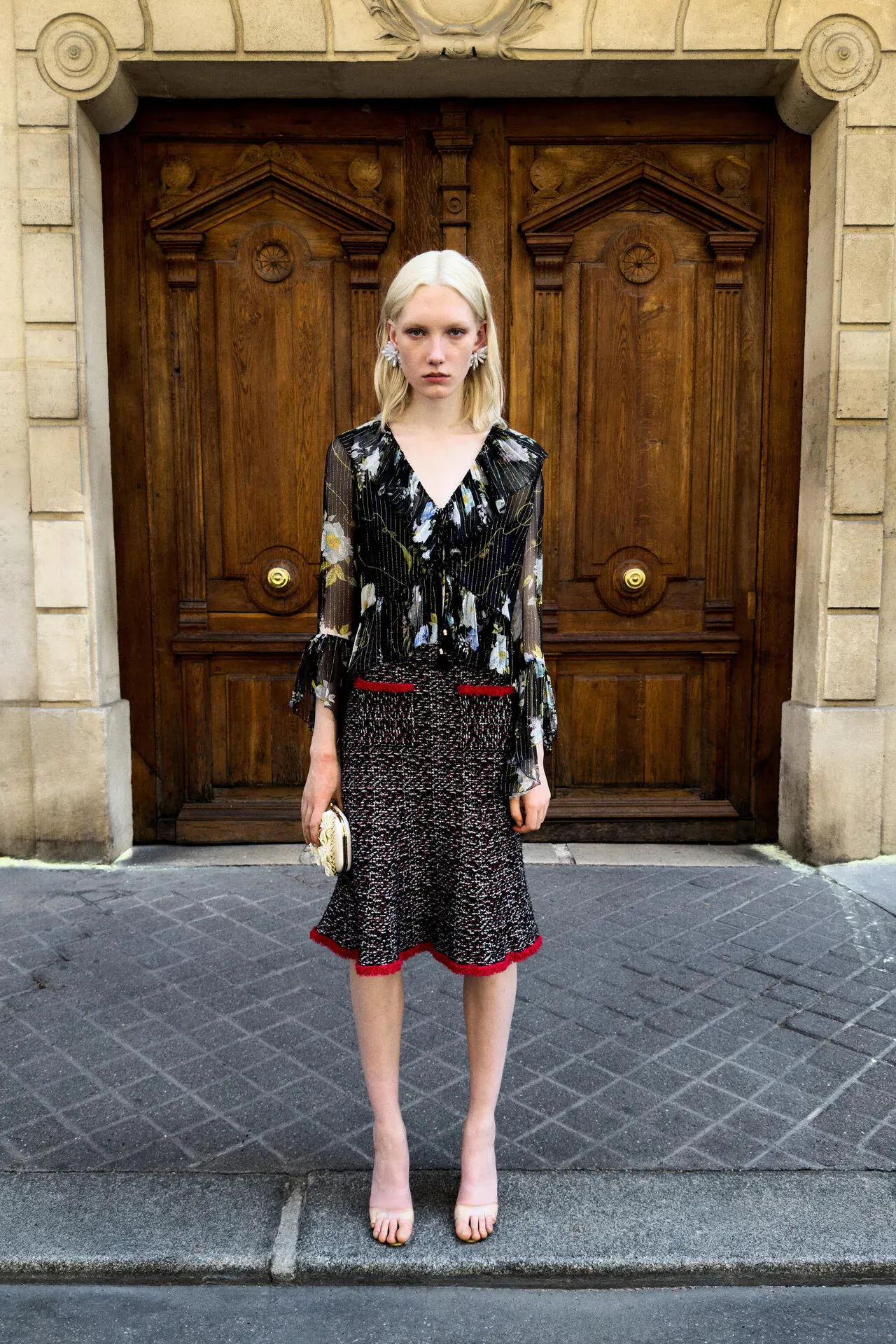
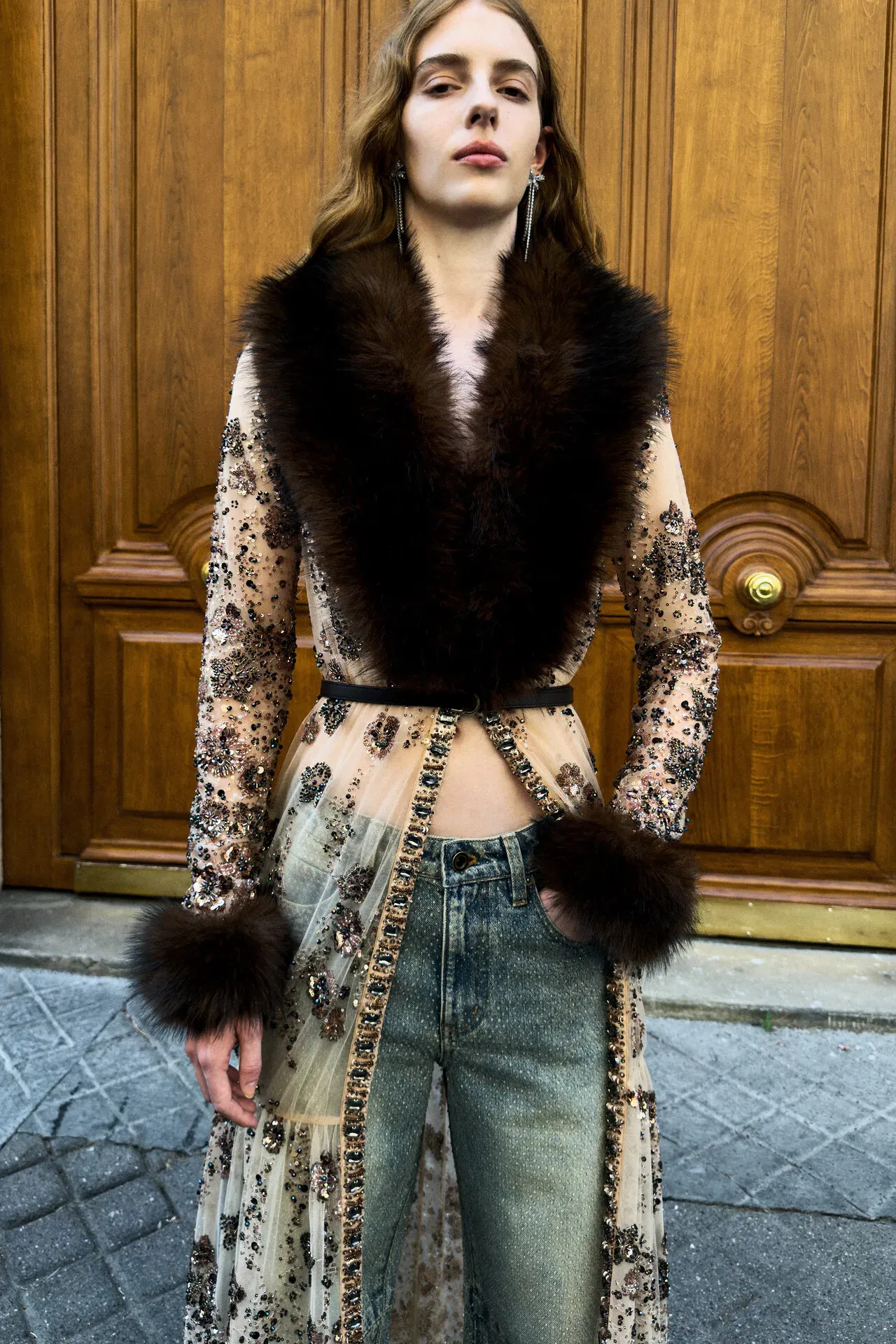
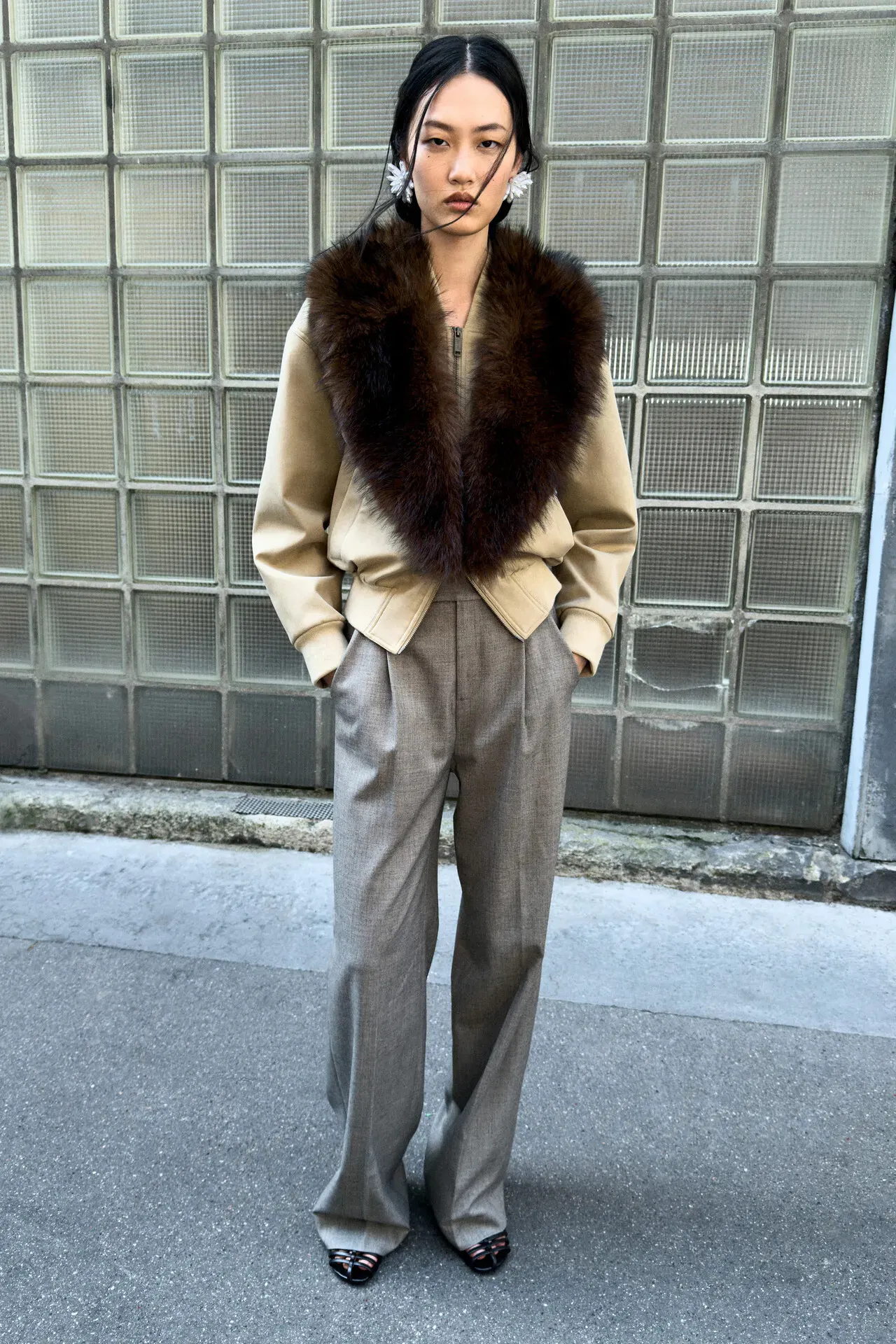
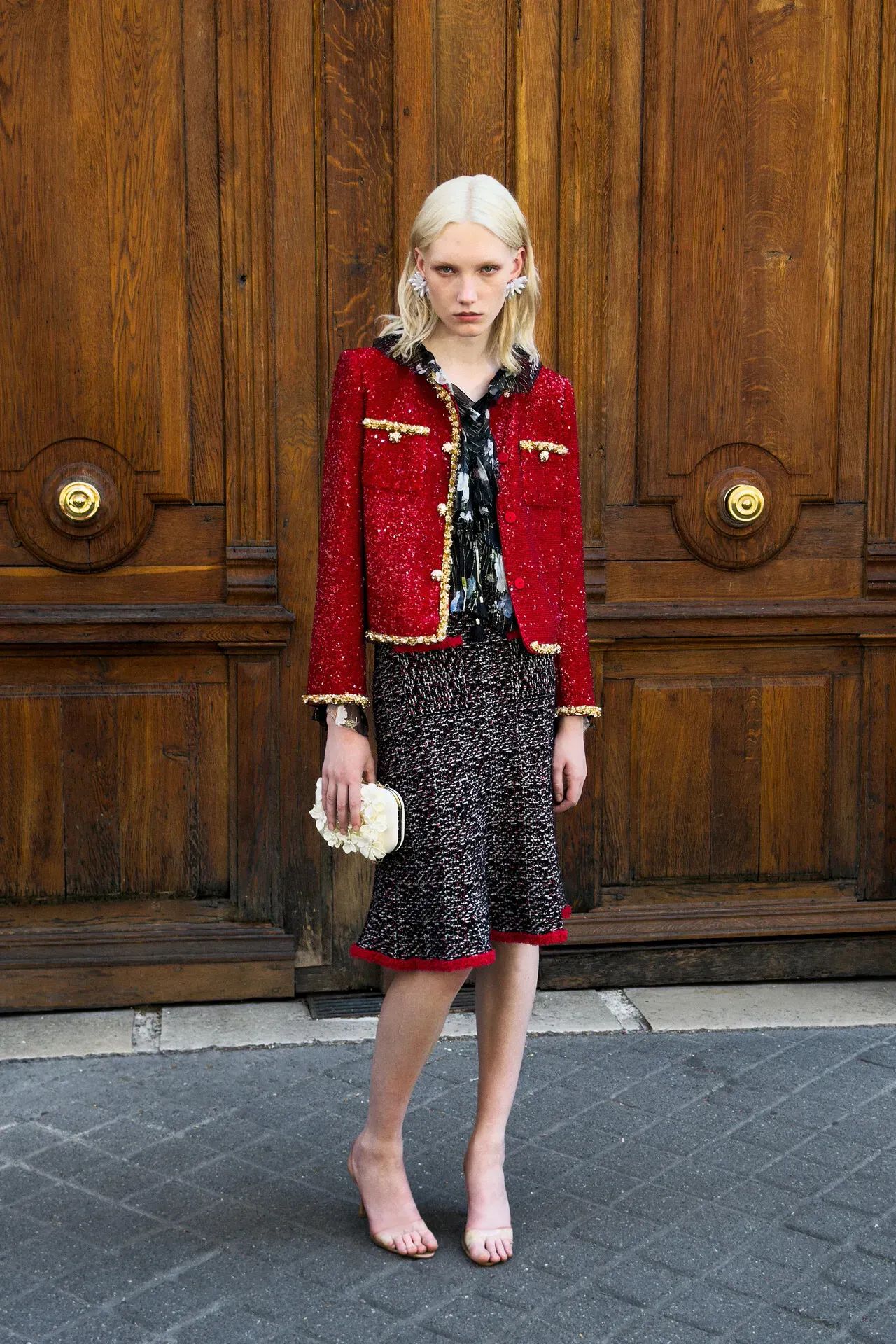
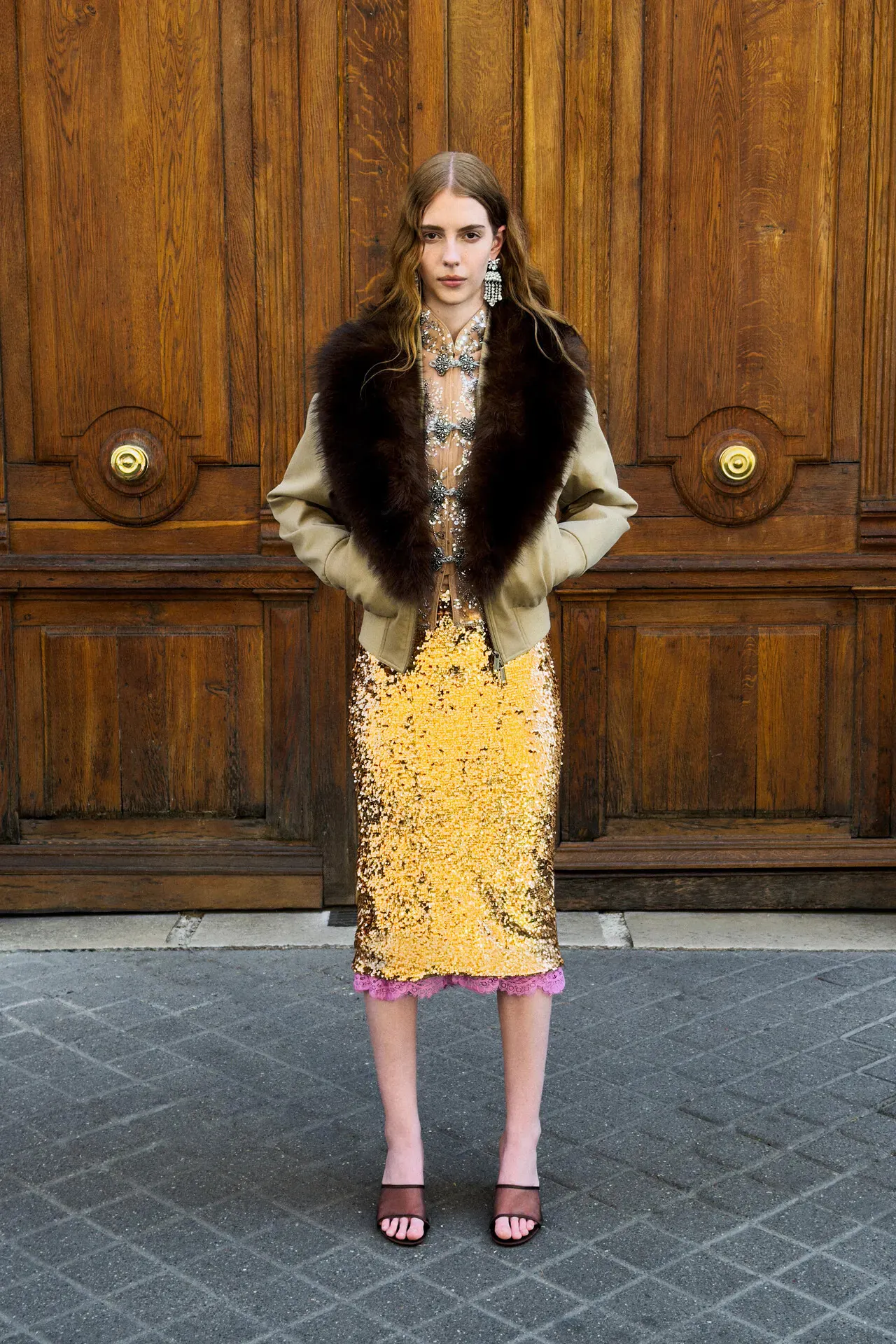
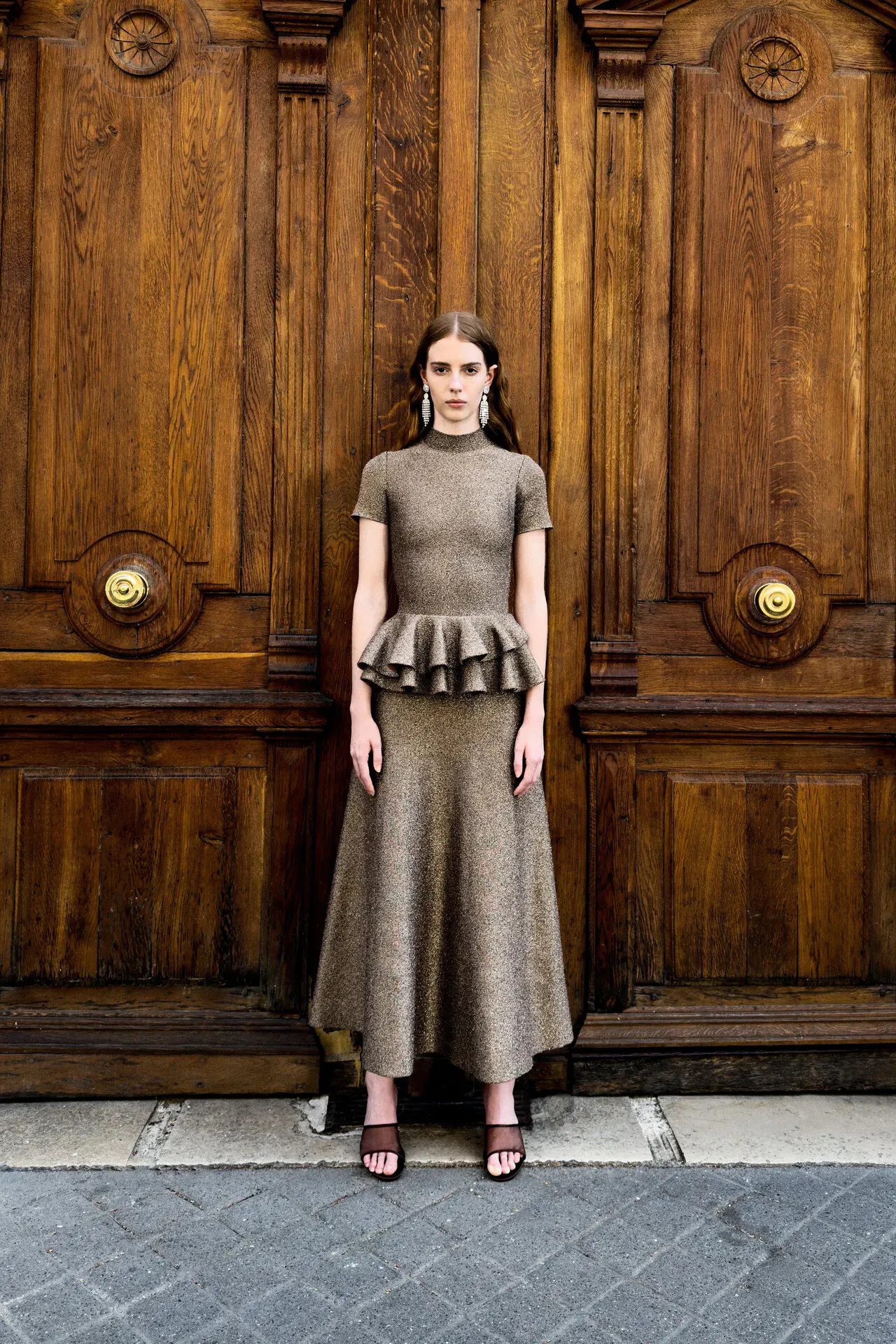
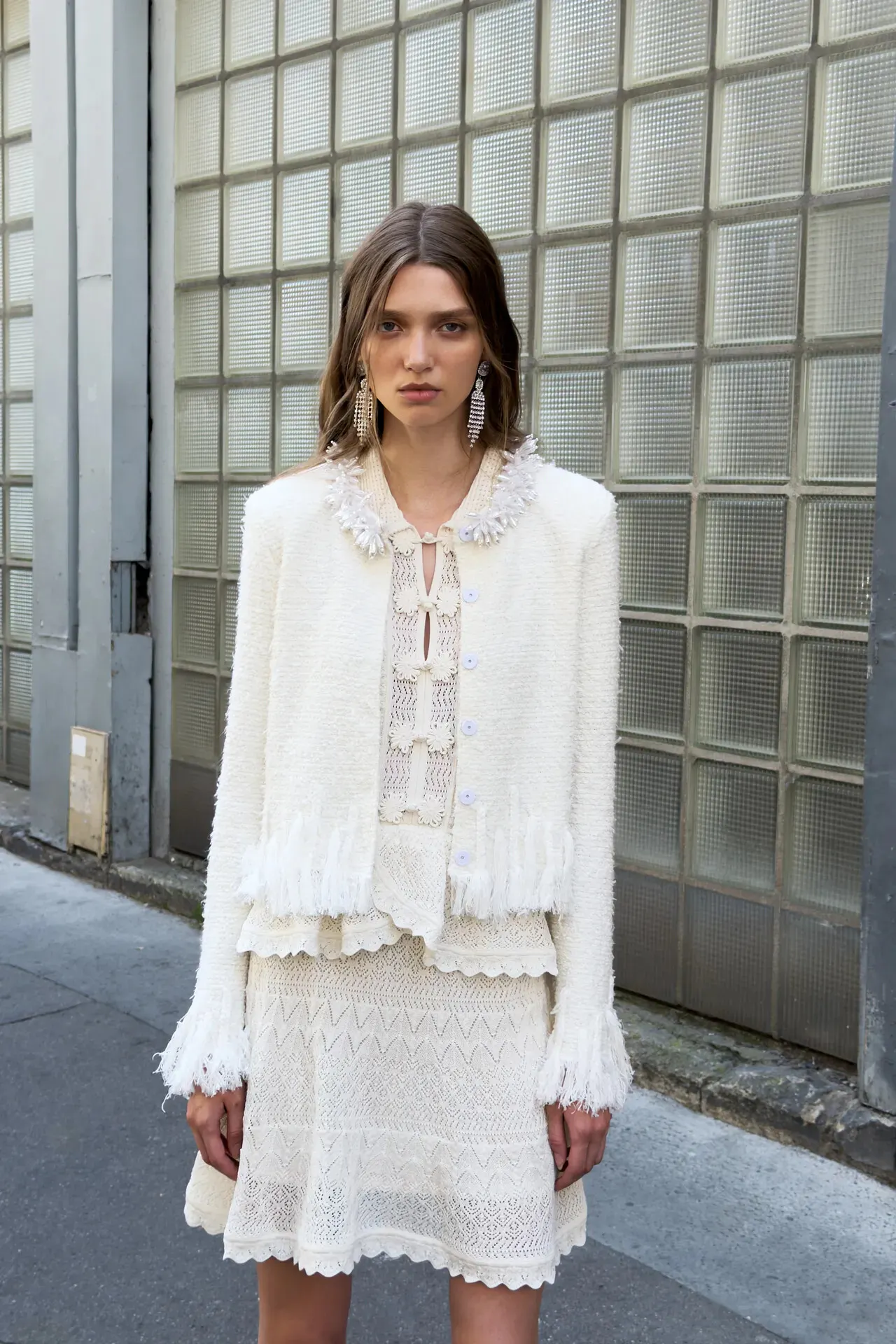
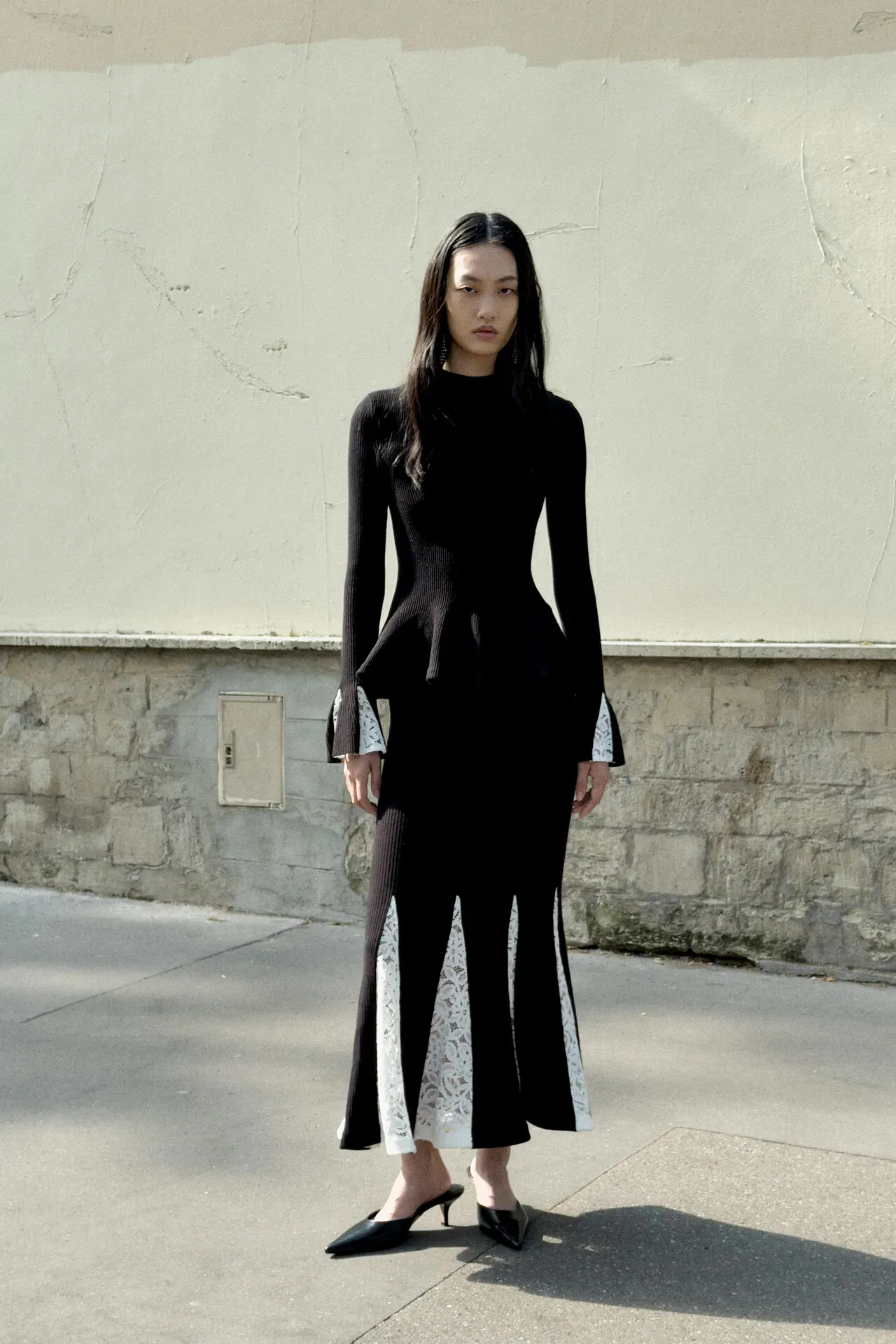
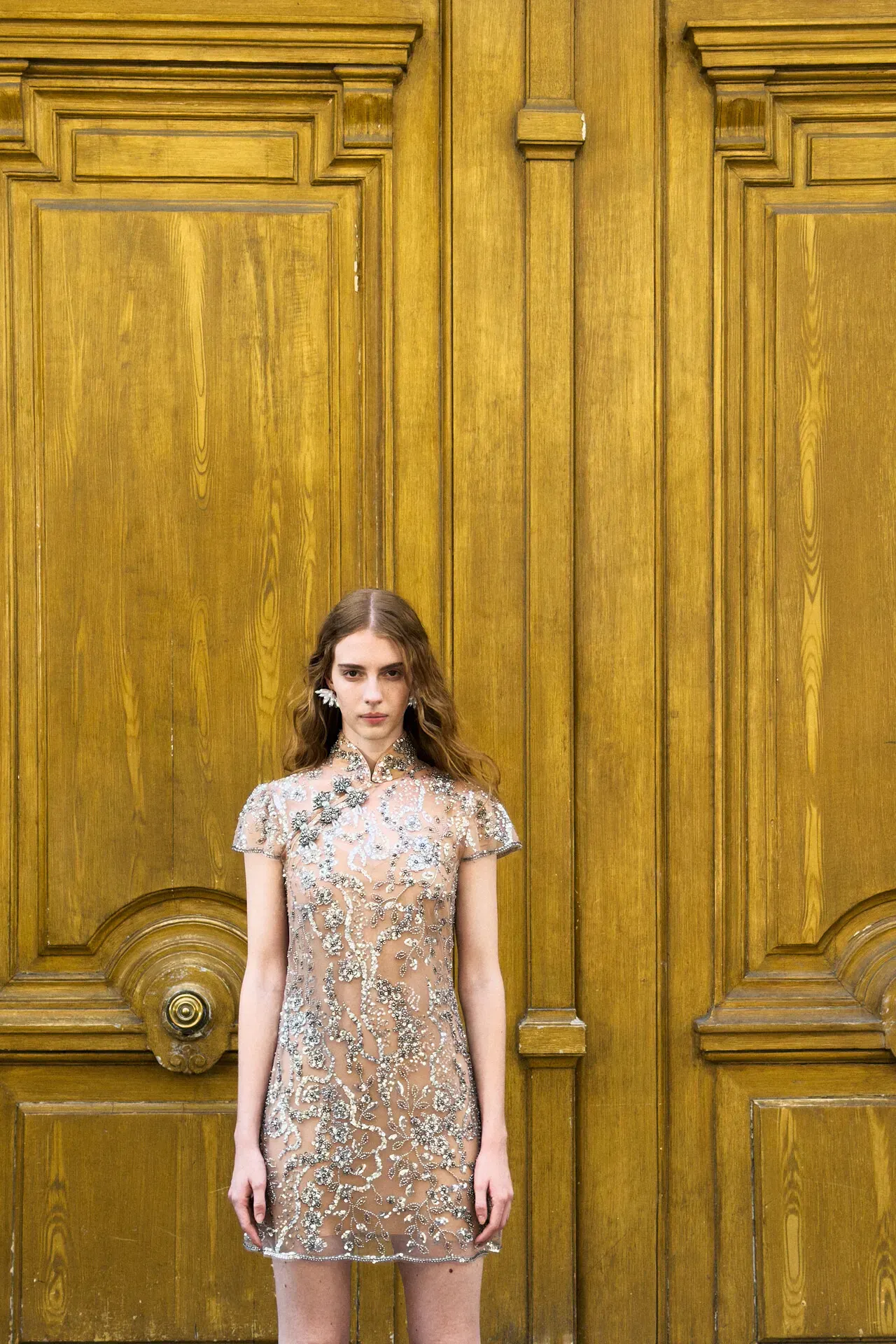
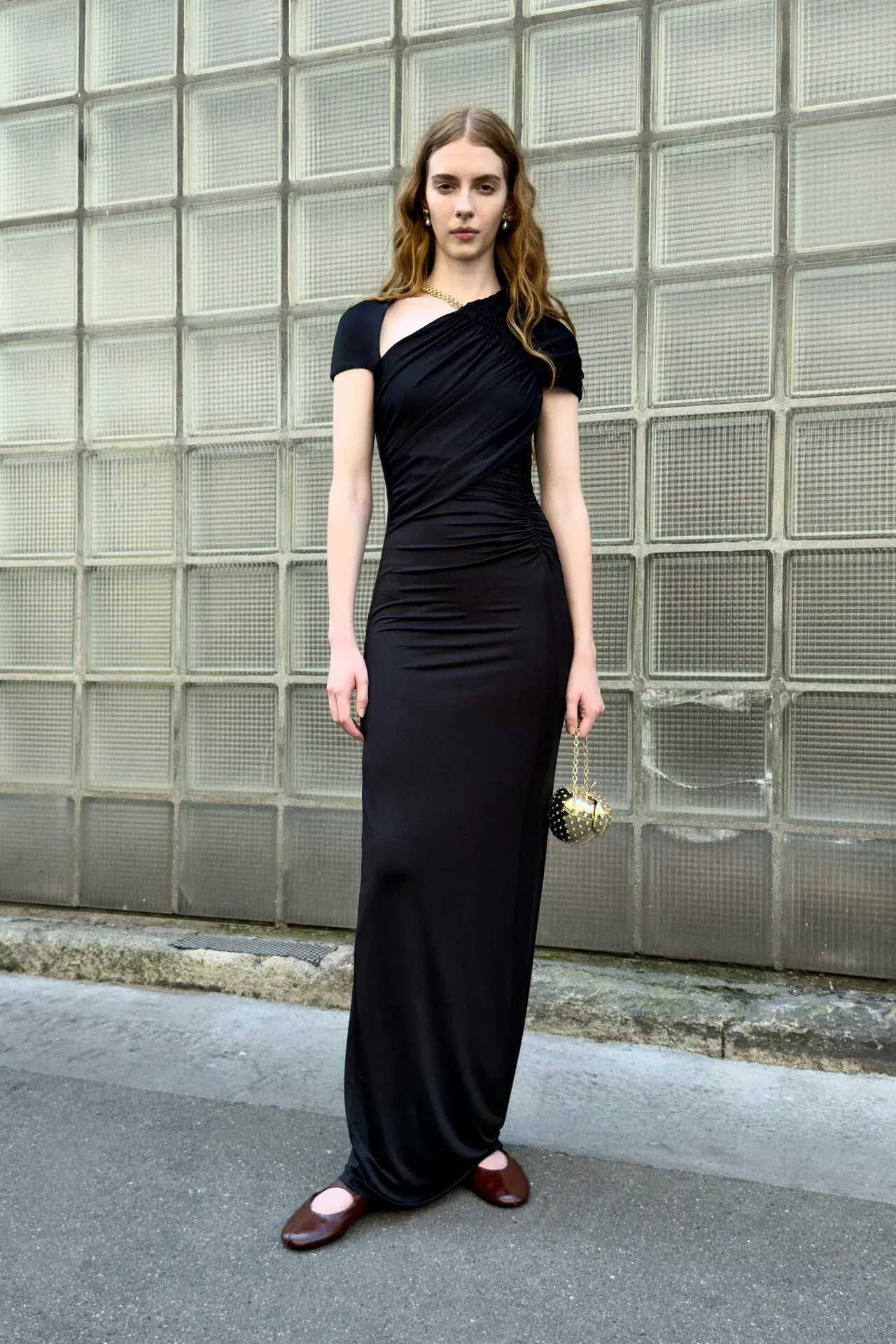
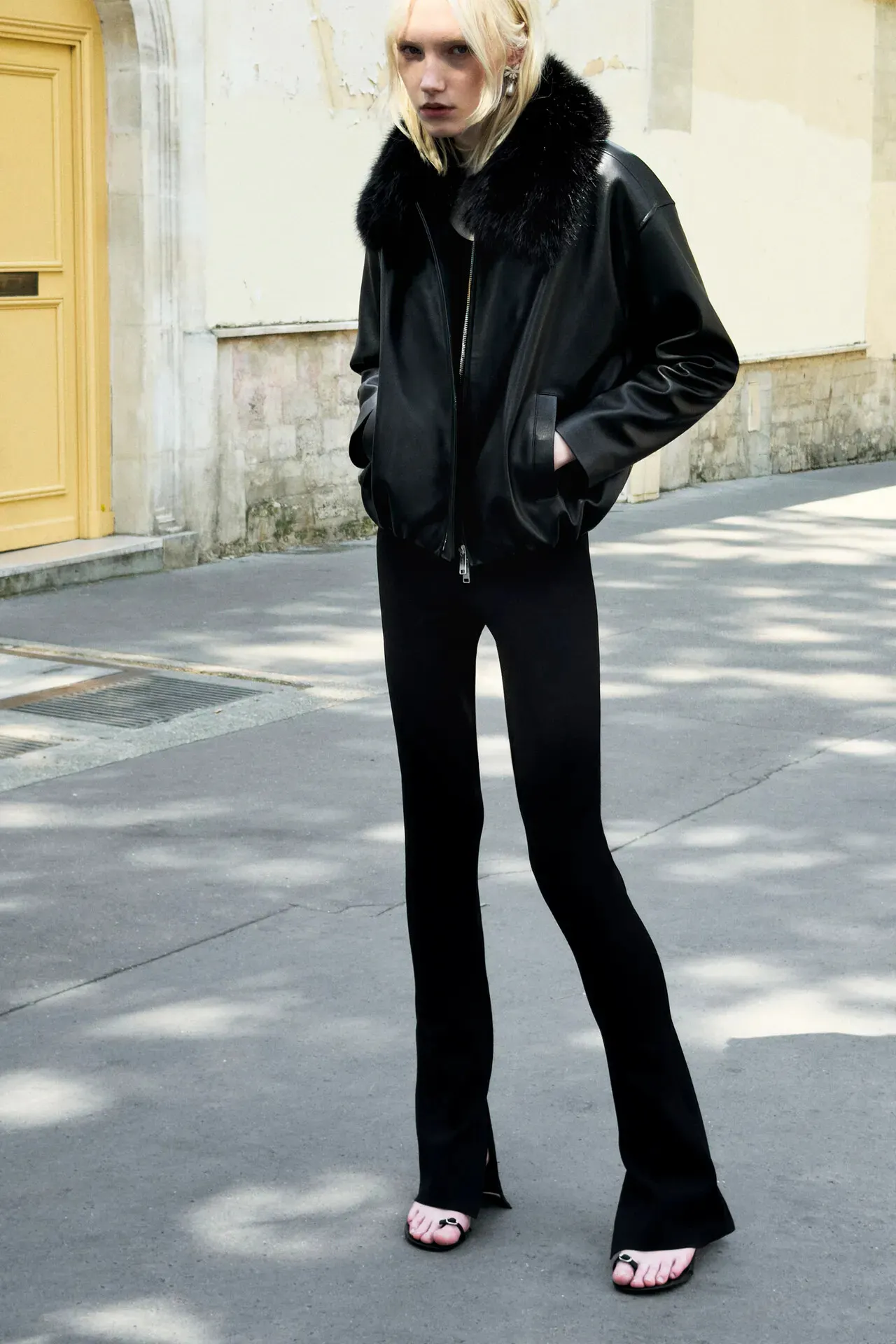
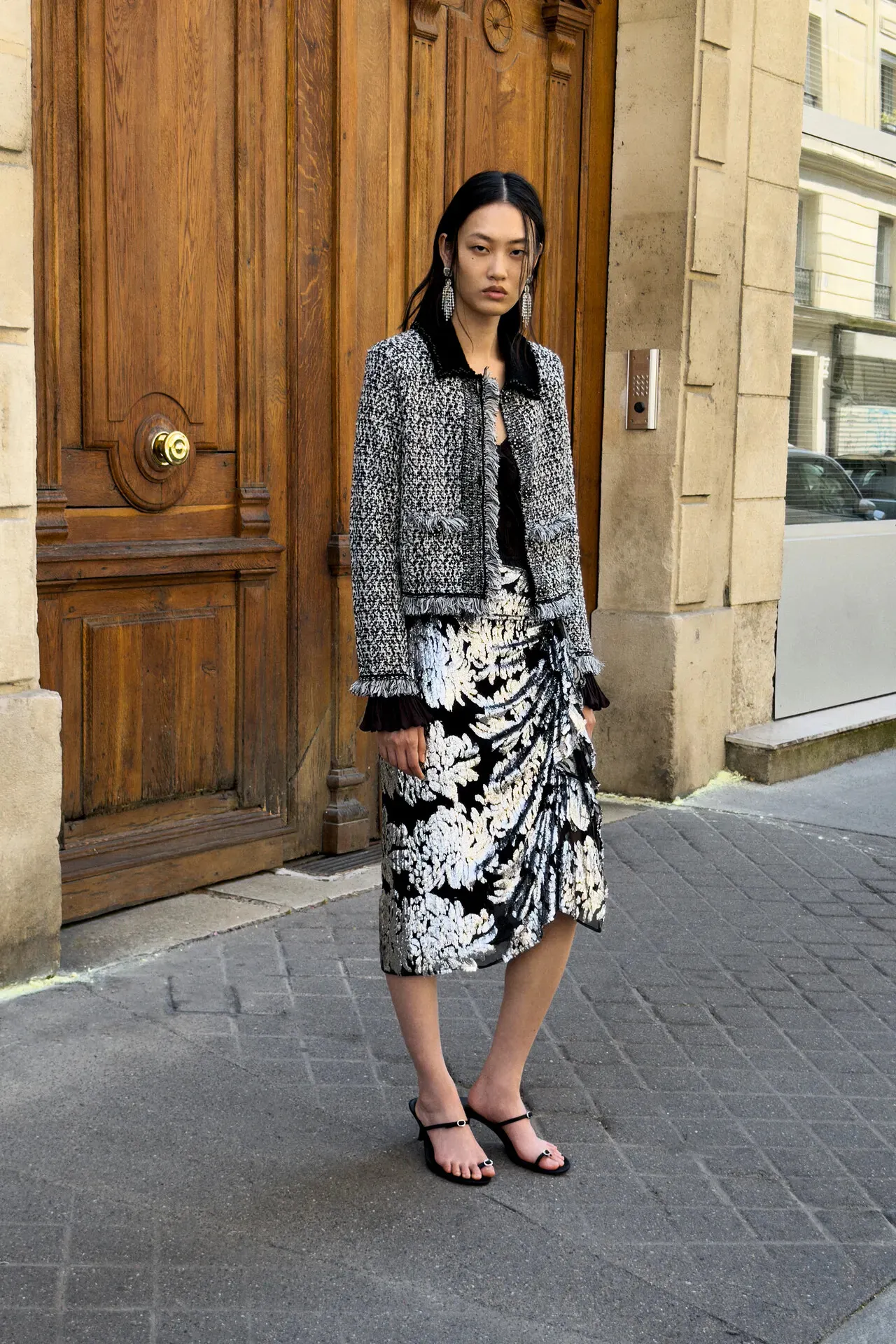
The setting is a sequence of old doors, cracked façades, hard daylight, repeated thresholds, service streets and asphalt.
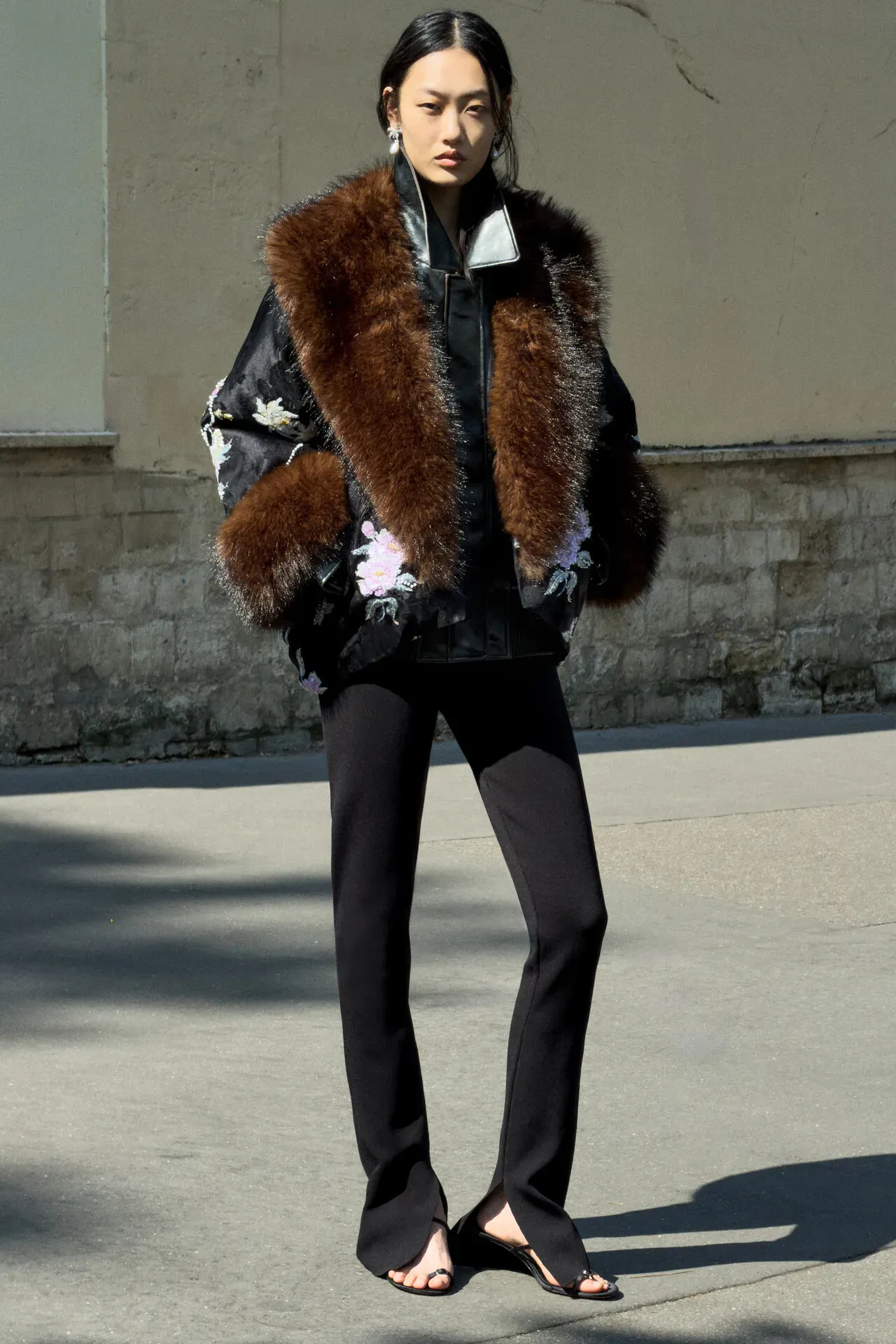
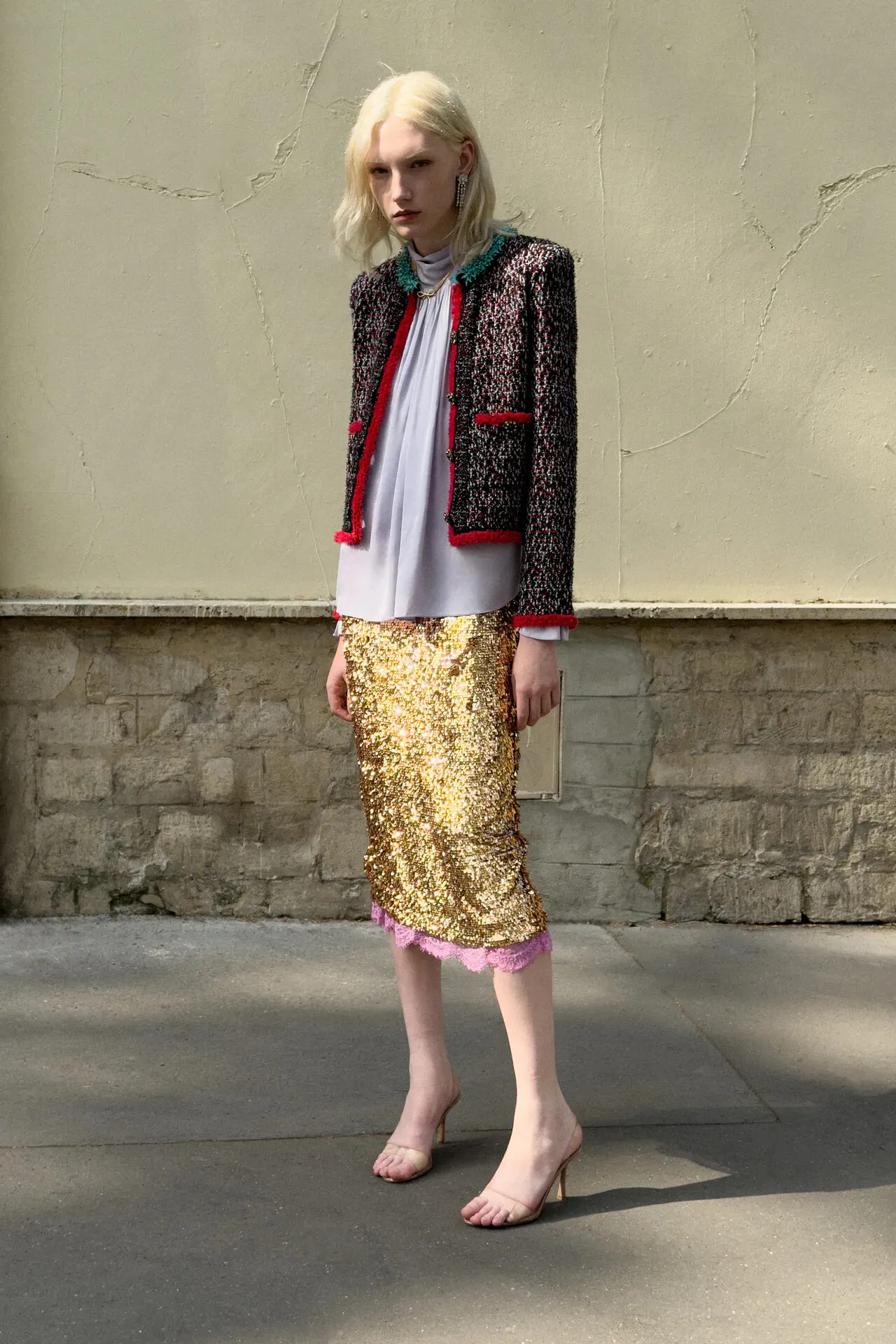
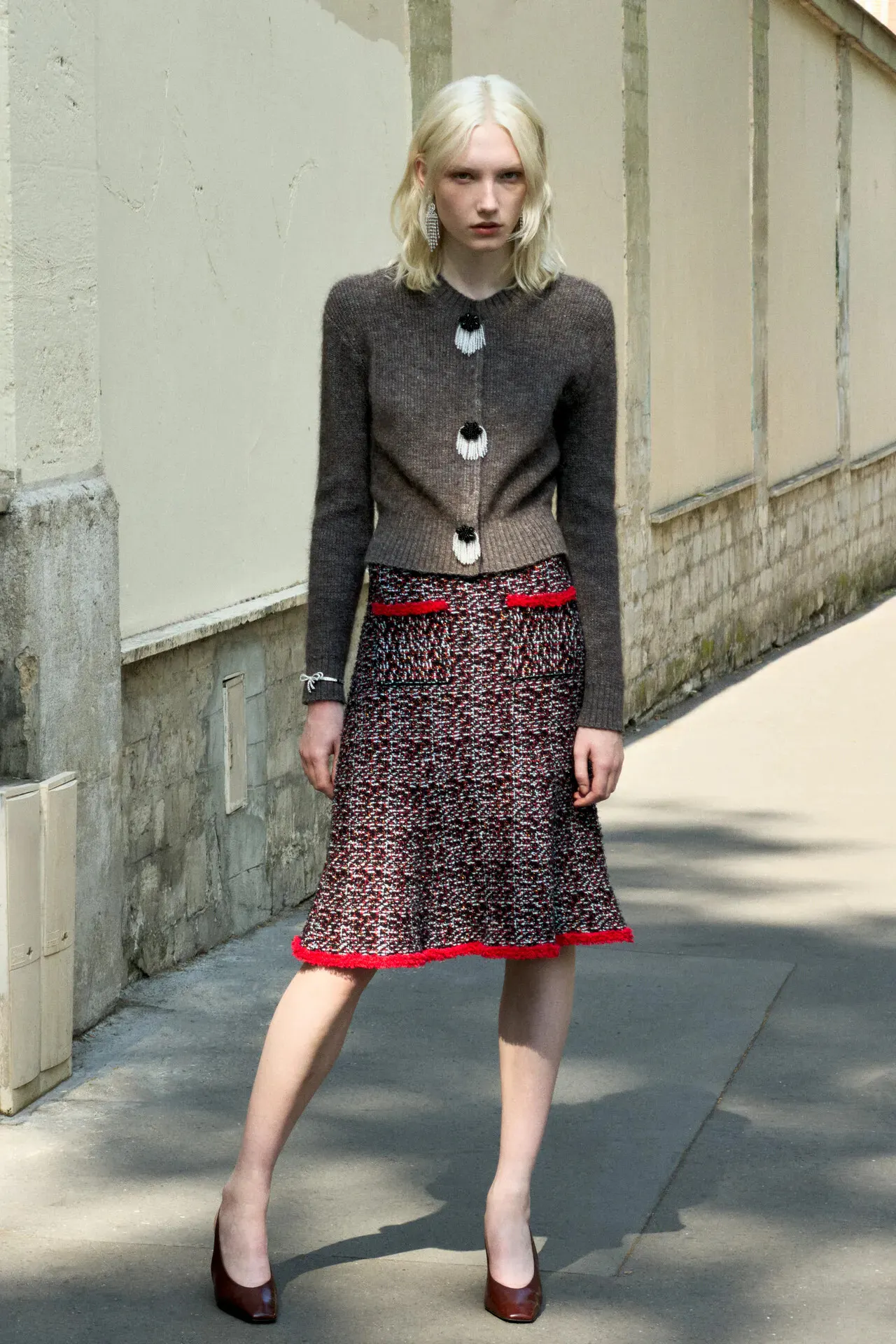
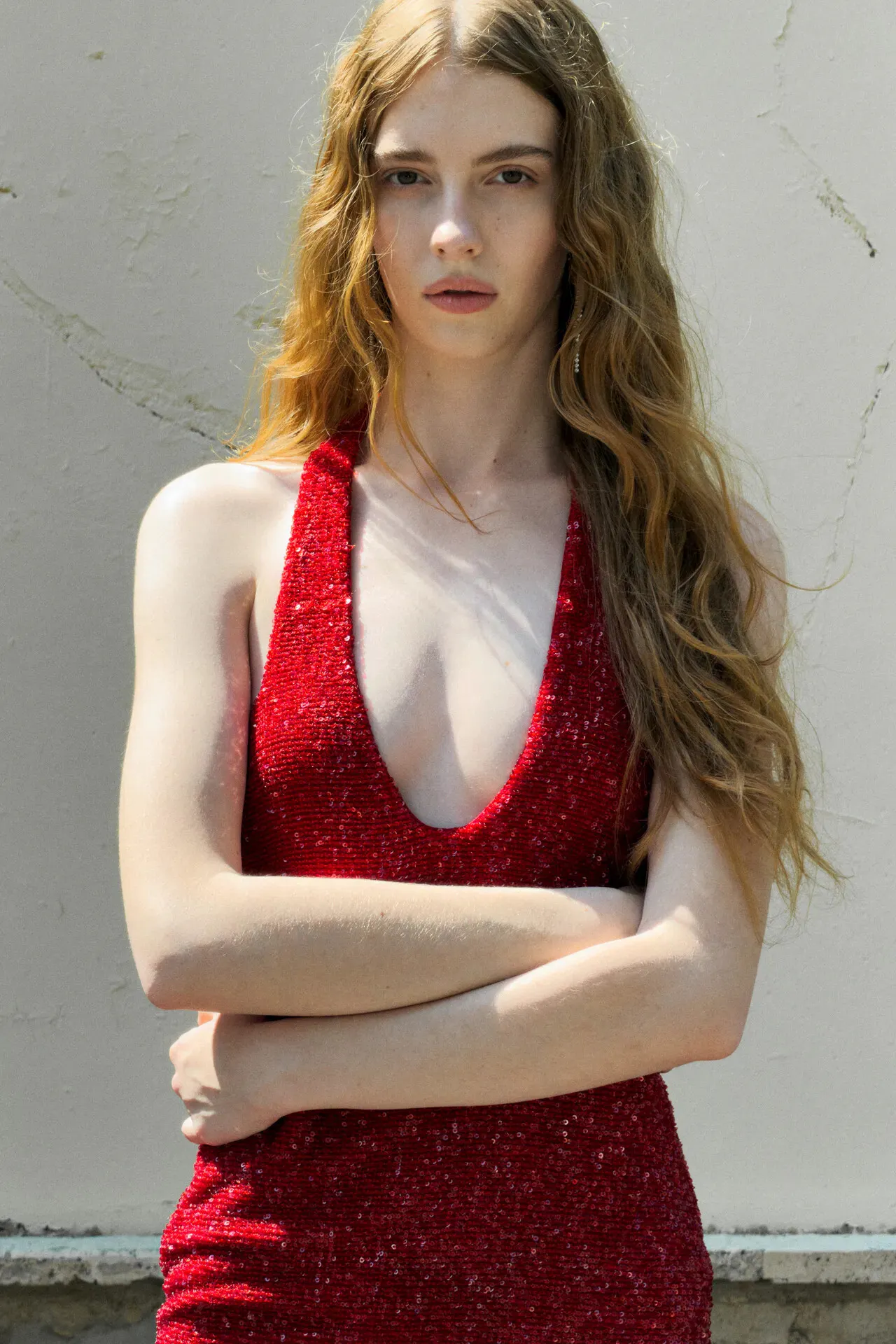
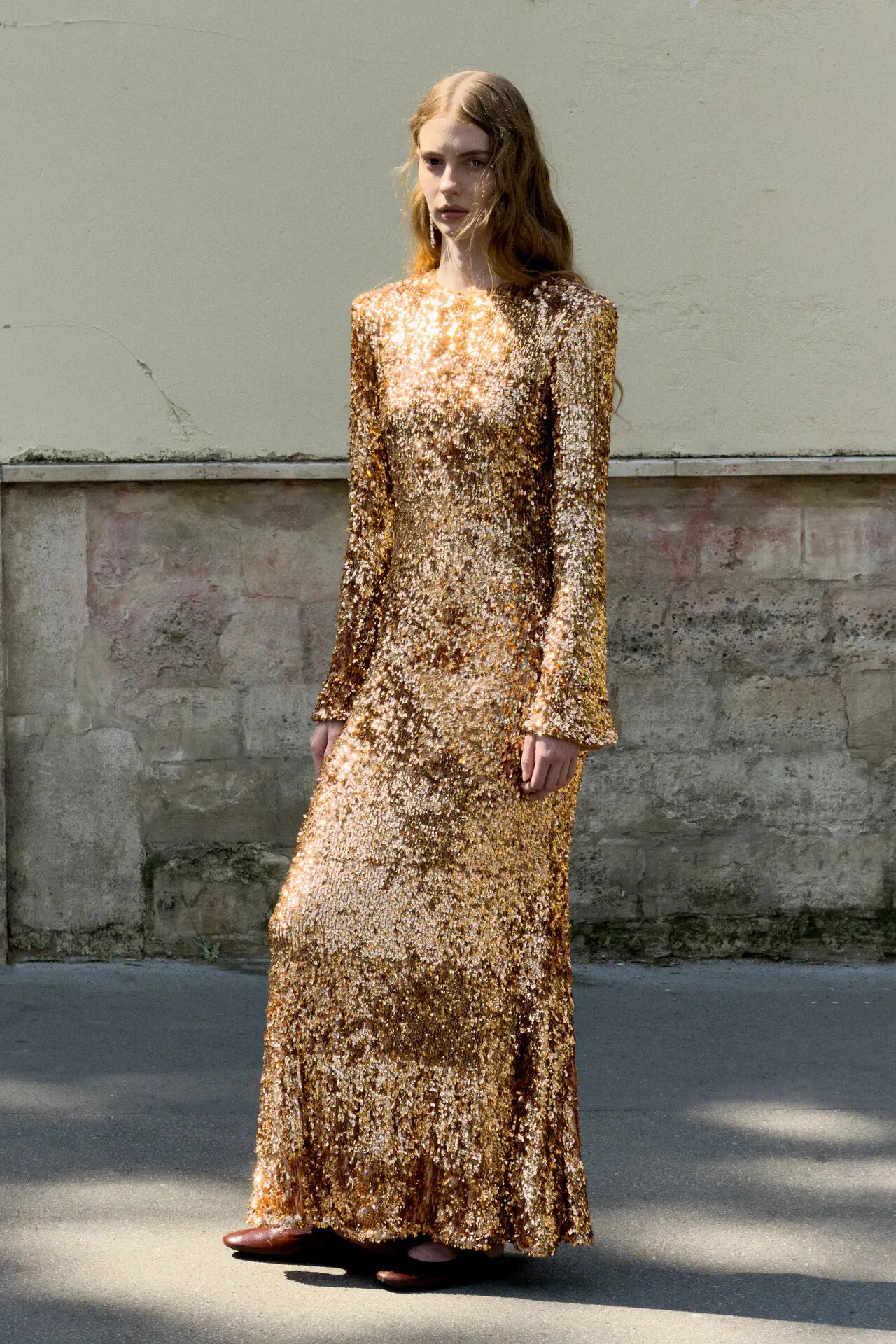
Sequins arrive in gold, red and silver. Tweed is edged in red or gold. Cardigans receive floral buttons. Tiny bags with tassels, flowers, chains and precious hardware. Black dresses are cut with lace, mesh, ruching, appliqué or beaded straps. Jackets accumulate fur or fur-like collars and arresting cuffs.
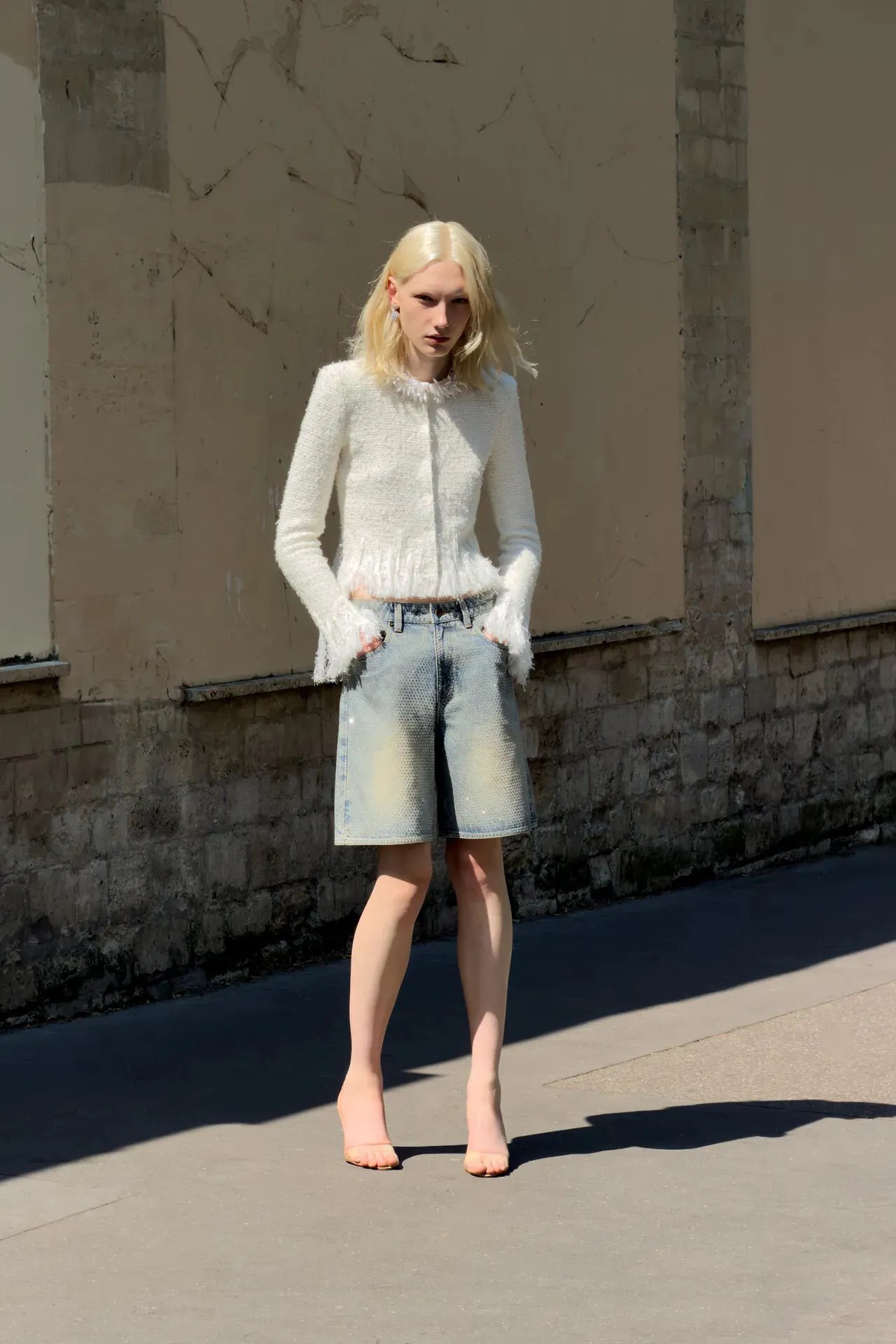
The collection repeatedly attempts to bridge incompatible social registers: denim with sequins, bomber jackets with fur collars, lace blouses with tailored trousers, lingerie silhouettes with miniature handbags, black leather with rhinestones.
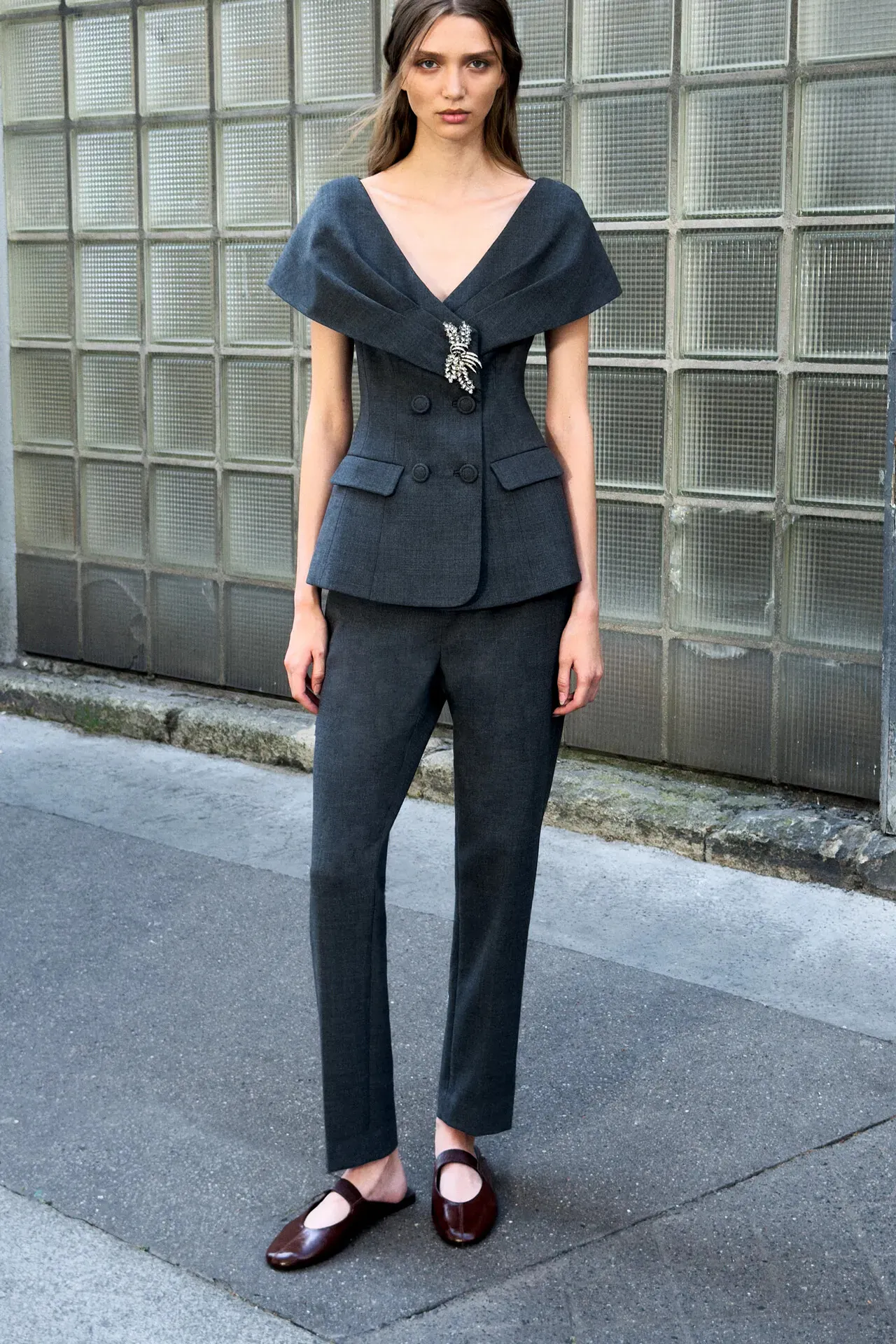
Thin sandals, ballet flats, Mary Jane-like shoes and small brown slippers recur.
The photographs offer little evidence of movement. Models stand frontally, hands at their sides or in pockets, bodies held against doors and walls. The presentation remains static.
The clothes are displayed as evidence, not tested against weather, speed, stairs, conversation or the material demands of a day.
Historically, the work belongs to a broad and familiar tradition of femininity: the cocktail dress, the salon jacket, the bouclé suit, the jeweled cardigan, the boudoir slip, the fur-trimmed evening coat, the decorative handbag.
These references are not inherently exhausted. Their saleable familiarity is why the collection is more revealing than it is radical. Its contemporary desire is not liberation but legibility an a clear commercial intelligence.